
Case study · Geoscience & subsurface studies
Custom multi-sample permeability test rig for corrosive HPHT studies | 140 bar
For a research center of a global energy company, IRIAN Mecatronics designed and built a test rig to measure the permeability of six samples in parallel. The equipment ensures high-precision (0.05%) differential pressure measurements under extreme corrosive conditions at 140 bar (2,030 psi) and 130°C (266°F).
01 — The research question
How can you accurately measure a very small pressure drop when the fluid and operating conditions actively degrade the measurement system?
Characterizing the permeability of porous media under reservoir conditions (high pressure, high temperature) requires precise fluid flow control over extended periods. The experiment's reliability hinges on the system's material integrity. Corrosion in the flow path introduces particles, contaminates the fluid, and causes measurement drift, masking the very phenomena being studied.
The project's objective was to study carbonation by injecting CO2-saturated brine at 140 bar (2,030 psi) and 130°C (266°F). At these conditions, the fluid becomes a highly aggressive carbonic acid. Standard stainless steel components would corrode rapidly, generating particles that damage valves, distort pressure measurements, and prevent any reliable study—a challenge we also addressed in our custom Hastelloy reactor systems.
Ensuring stable and accurate high-precision differential pressure measurements when the operating conditions (corrosive fluid, HPHT) actively degrade both the flow path materials and the sensors.
02 — Our approach
Design driven by measurement integrity
To ensure long-term data reliability, every design choice aimed to eliminate the root causes of drift and failure, rather than merely compensating for their effects.
-
Eliminating corrosion at the source
The process fluid (brine + CO2 at 130°C / 266°F) is highly corrosive to stainless steels. We built all wetted parts from Hastelloy C-276, a material that is inherently inert in this environment. This design choice ensures the equipment's long-term integrity and prevents fluid contamination, guaranteeing repeatable measurements.
-
Ensuring direct and stable pressure measurement
To measure a very low pressure drop, we selected sensors with diaphragms made of a corrosion-resistant alloy. This approach avoids complex fluid separation systems, which are sources of leaks and measurement artifacts. The digital output preserves signal integrity all the way to the PLC, providing a direct, reliable, and precise measurement.
-
Improving the reliability of the automated circuit
Particles from the sample or from corrosion can damage the seats of conventional needle valves and cause leaks. We used a valve technology with an operating principle that is less sensitive to solid particles. This choice increases the reliability of the automated system and prevents failures during long-duration tests.
03 — Beyond this project
Could this approach apply to your project?
Geosciences and CO2 Storage (CCUS)
For characterizing rock-fluid interactions (permeability, reactivity) under reservoir conditions with brines, CO2, or H2S. The core principles—a fully inert HPHT circuit, high-precision pressure measurement, and automation—would be directly applicable.
Fine chemistry and materials science
For qualifying the aging resistance of materials (alloys, polymers) exposed to critical fluids like wet H2 or geothermal brines. The HPHT control architecture, use of high-performance alloys, and data acquisition system would be identical, with the pressure vessel design adapted as needed.
Chemical process development
For developing synthesis processes involving highly corrosive reagents or solvents under extreme conditions. The robust sealing, chemically inert flow path, and precise control of parameters (pressure, flow rate) are directly transferable to reactors or pilot plants.
04 — Specifications
The values for this project. Every system is custom-built, so they adapt to your requirements.
Show specifications · 140 bar (2,030 psi) · 130°C (266°F) · Up to 6 slim tubes simultaneously
| Maximum operating pressure | 140 bar (2,030 psi) |
|---|---|
| Maximum operating temperature | 130°C (266°F) |
| Capacity | Up to 6 slim tubes simultaneously |
| Pressure measurement accuracy | 0.05% |
| Pressure measurement resolution | 0.01 bar (0.145 psi) |
| Wetted materials | Hastelloy C-276 (as-described version) or Stainless steel (base version) |
IRIAN Mecatronics designs and builds custom high-pressure, high-temperature equipment for research laboratories, technical centres and industry.
About the companyThey trust us






















05 — FAQ
Frequently asked questions
Can this permeability test rig be used with H2S-containing fluids?
Yes, the design principle is suitable for highly corrosive environments, including those with sour gases like H2S. The material selection (in this case, Hastelloy C-276) is validated for each specific application based on concentrations, pressure, and temperature to ensure full compatibility. The overall architecture of the test rig would remain the same.
Can this system be adapted to test the permeability of rock cores?
Absolutely. The fundamental principles—an inert flow path and precise differential pressure measurement—are independent of the sample size. The main adaptation would be to design custom HPHT analysis cells to hold rock cores. The pumps and instrumentation would be sized accordingly for the new flow rates and volumes.
Can the test rig be controlled to perform alternating or pulsed flow injections?
Yes, the system is controlled by a PLC (Programmable Logic Controller), which provides significant flexibility. It is entirely possible to program complex injection sequences, such as flow reversal, pressure cycles, or pulsed injections at very low flow rates. The performance will depend on the valve manifold configuration and the chosen HPHT injection system.
Does the equipment design comply with NACE standards for corrosive environments?
Yes, our equipment is designed to meet the industrial standards required for the application. For corrosive environments, we select materials (alloys, elastomers) and qualify welding procedures in accordance with NACE recommendations (e.g., NACE MR0175 / ISO 15156). All our equipment also complies with the Pressure Equipment Directive (PED).
Are corrosion or system instability affecting your permeability measurements?
Describe your fluid, operating conditions, and target accuracy. Our in-house engineering team will analyze your challenge to propose a suitable technical solution.
Related projects
 Geoscience & subsurface studies
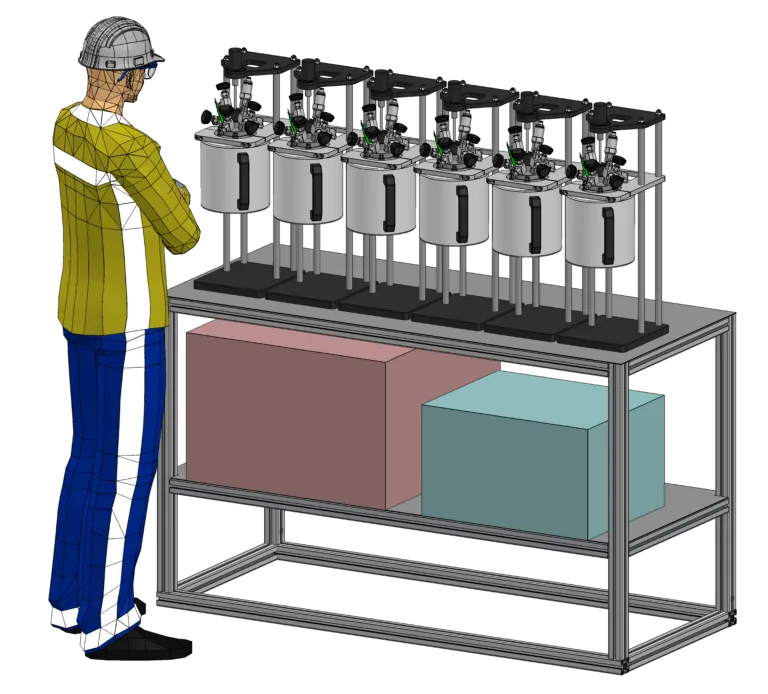
Custom Hastelloy C276 HPHT reactor system for geoscience research
Geoscience & subsurface studies500 bar500°C105 mLConfidential project · photo withheld
Geoscience & subsurface studies
Custom HPHT Permeameter for Rock Permeability Testing at 500°C / 500 bar in Corrosive Fluids
Geoscience & subsurface studies
Custom Hastelloy C276 HPHT reactor system for geoscience research
Geoscience & subsurface studies500 bar500°C105 mLConfidential project · photo withheld
Geoscience & subsurface studies
Custom HPHT Permeameter for Rock Permeability Testing at 500°C / 500 bar in Corrosive Fluids
 Geoscience & subsurface studies
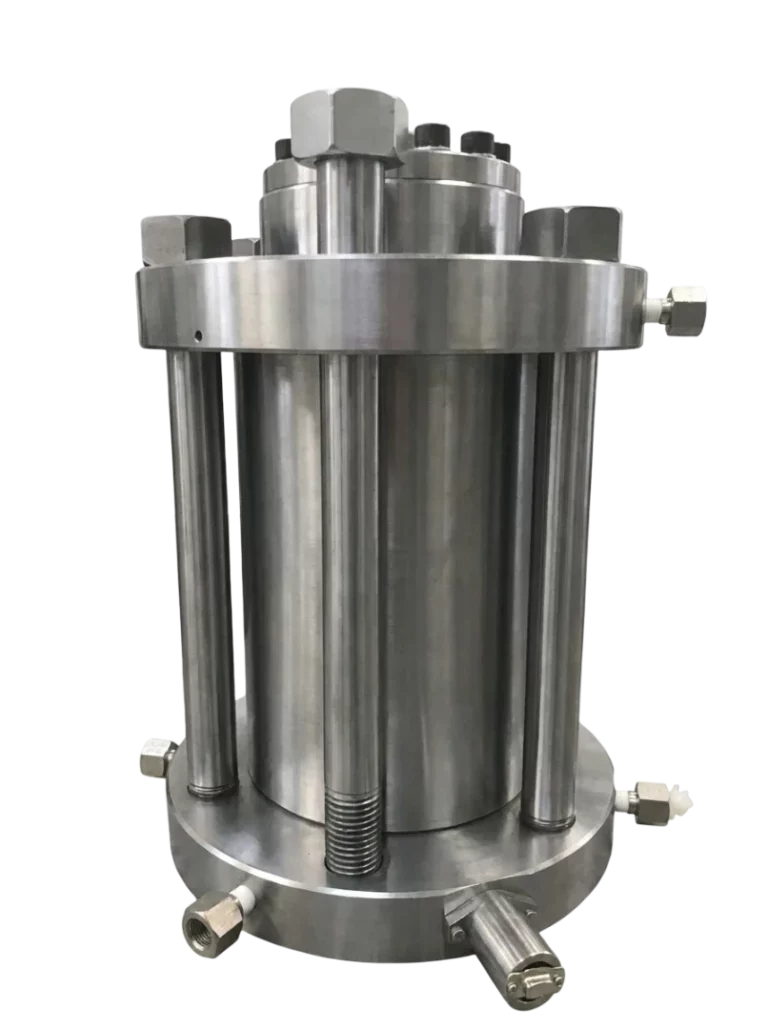
Wide-range gas permeability test bench and triaxial cell for geomechanics
Geoscience & subsurface studies
Wide-range gas permeability test bench and triaxial cell for geomechanics
 Geoscience & subsurface studies
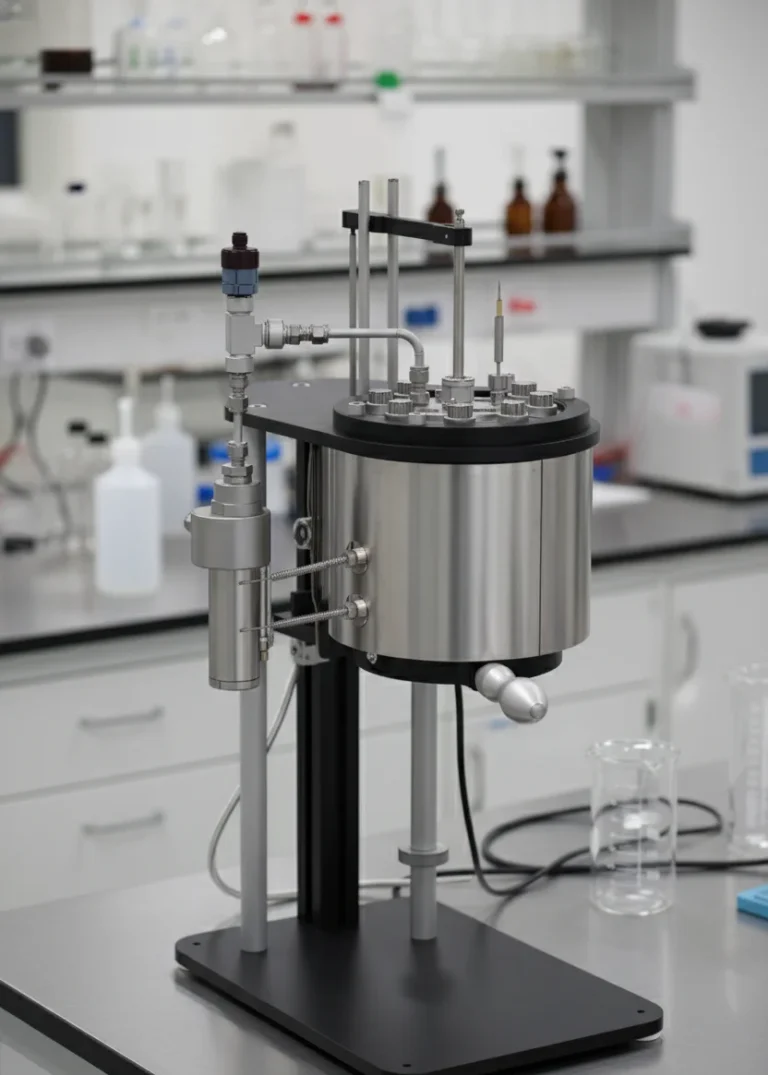
Multi-mode HPHT reactor for geochemical simulation in corrosive media
Geoscience & subsurface studies
Multi-mode HPHT reactor for geochemical simulation in corrosive media