Skip to content

Pressure vessel design

Custom HPHT reactors, autoclaves, and analysis cells

For researchers and engineers who need to run reactions or analyses under high pressure and high temperature, we design custom reactors, autoclaves, and cells. Our expertise in materials and pressure design allows us to build equipment for corrosive environments, integrate in-situ measurements, or include mechanical action where standard equipment falls short.

01 — The problems we solve

Your tests, our custom solutions

Every experimental protocol has unique challenges. Here is how we have solved complex problems for researchers and engineers in various fields.

Withstand an aggressive medium for the whole test

Acidic, sour or saline fluids, heat and pressure attack the vessel and its seals, and corrosion ends up contaminating the sample. The choice of alloys and seals decides both the equipment's service life and the accuracy of the results.

Delivered for

See the 6 projects ↓

02 — Projects

Our projects in HPHT reactors and cells

13 projects

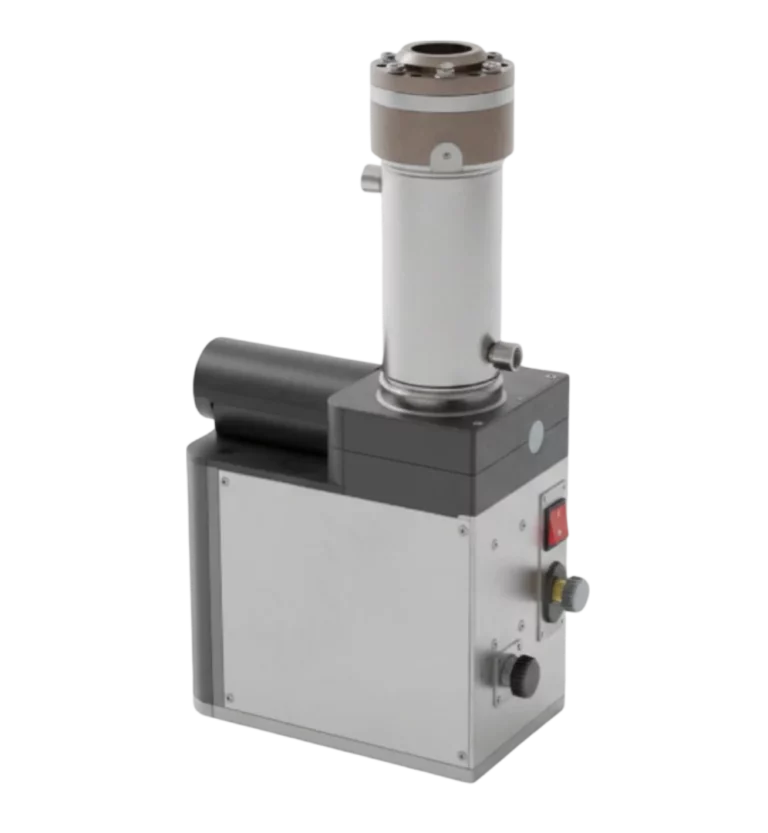
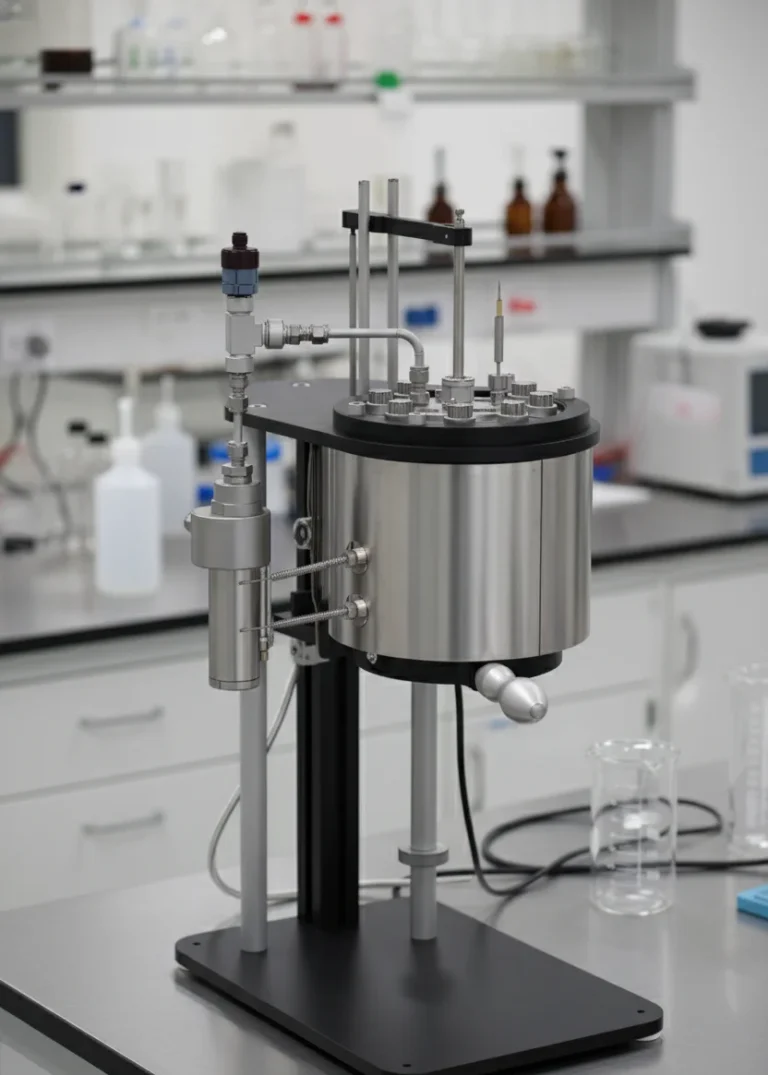
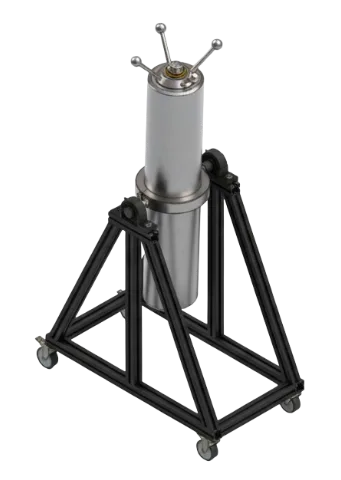
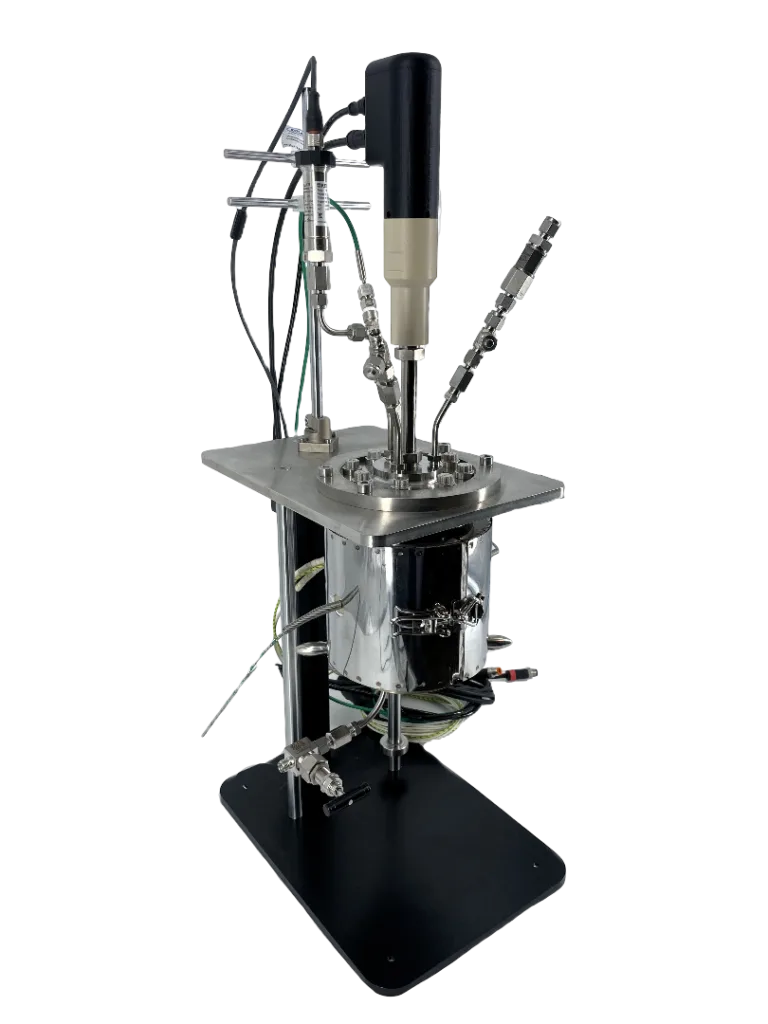
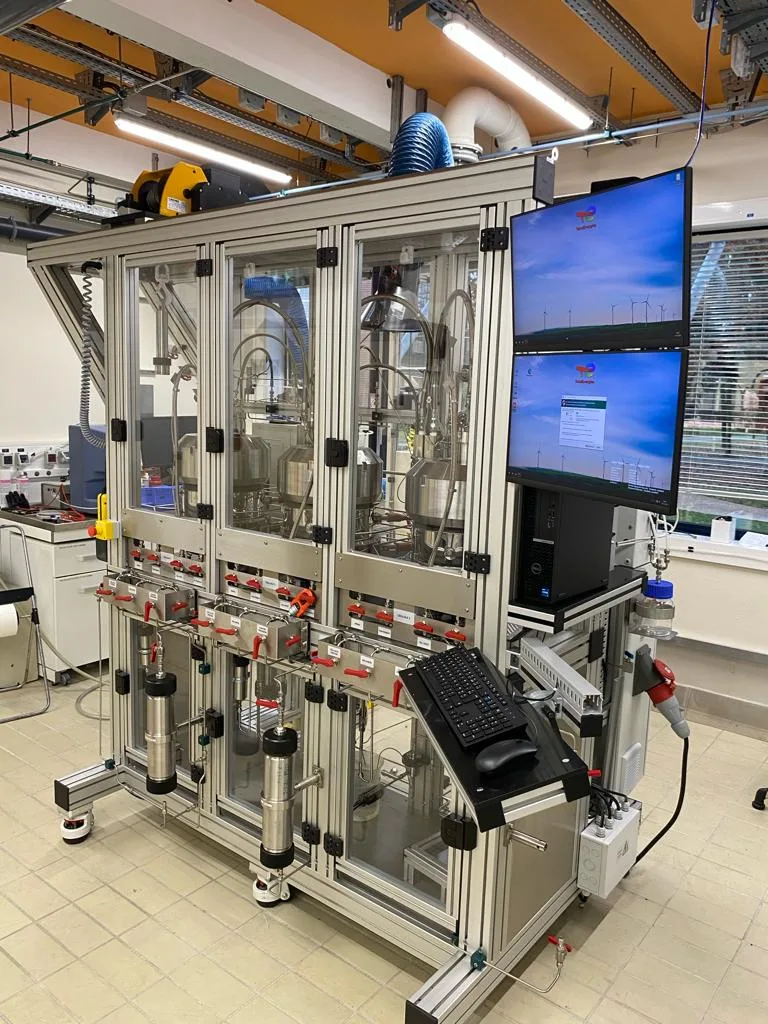
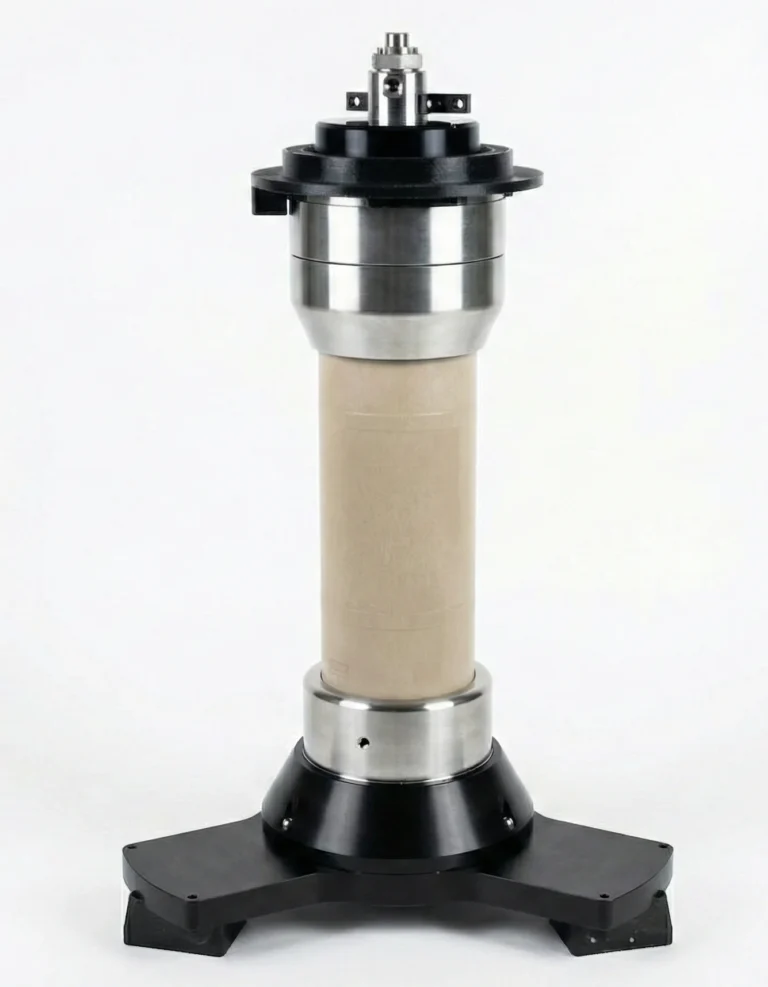
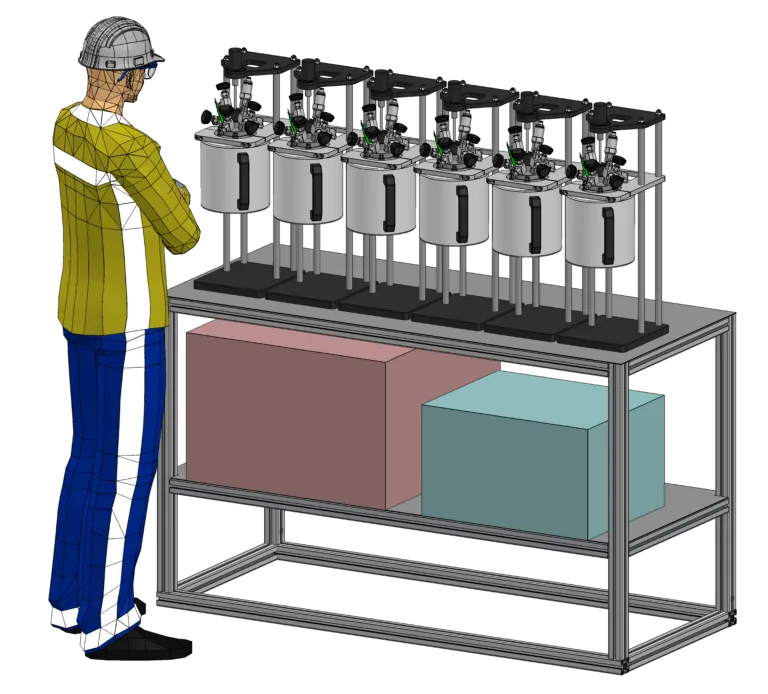
Geoscience & subsurface studies500 bar500°C105 mLConfidential project · photo withheld Geoscience & subsurface studies Custom HPHT Permeameter for Rock Permeability Testing at 500°C / 500 bar in Corrosive Fluids Custom permeameter design for a geoscience lab. The equipment measures rock permeability under extreme conditions (500 bar, 500°C) in contact with highly corrosive aqueous… HPHT reactors & cells100 bar350 °C2 LConfidential project · photo withheld HPHT reactors & cells Studying corrosive reactions at 100 bar & 350°C: a custom 2L Hastelloy C276 stirred reactor Design of a 2L pilot reactor in Hastelloy C276 for chemical engineering research. The equipment enables depolymerization reactions up to 100 bar and 350°C,… reacteur rotatif haute pression mecanochimie 3 HPHT reactors & cells Custom high-pressure rotating reactor for mechanochemistry at 250 bar Design of a rotary mechanochemistry reactor for materials chemistry research. This custom equipment enables ball milling in a supercritical CO2 environment, ensuring a perfect… 3D view of a motorised 50 mL variable-volume cell rated for 500 bar Fluid dynamics & phase behavior 500 bar / 150°C titanium variable volume cell for HP fluid research Design of a 50 mL titanium HPHT cell for studying fluid phase behavior at 500 bar / 150°C. A custom solution that integrates magnetic… HPHT reactors & cells200 bar300°CConfidential project · photo withheld HPHT reactors & cells Pressurized flow reactor systems for CO2 capture (CCUS) research Reactor platform (Tubular & CSTR) for CO2 capture research (200 bar, 300°C). Extreme environment simulation systemsConfidential project · photo withheld Extreme environment simulation systems High-pressure autoclaves for flammable gas (ATEX) testing high-pressure autoclave benches for flammable gases (H2). Features full ATEX safety integration and ergonomic handling. HPHT reactors & cells200 bar300°CConfidential project · photo withheld HPHT reactors & cells High-pressure continuous flow reactors for gas-liquid process research R&D platform with high-pressure tubular (PFR) and stirred (CSTR) reactors for gas-liquid process studies and catalyst screening. Custom 550 bar HPHT reactor in super duplex steel on an articulated laboratory stand Geoscience & subsurface studies Multi-mode HPHT reactor for geochemical simulation in corrosive media Design of a custom modular HPHT reactor for geoscience research. The equipment allows for multiple types of experiments (batch, gas cap) at 550 bar… Tall HPHT floating-piston cell mounted vertically on a mobile stand Geoscience & subsurface studies 1200‑bar floating piston cells for HPHT reservoir fluid studies We built 1200 bar HPHT floating piston cells (up to 5L) for reservoir fluid studies. Made of Super Duplex F53, they resist corrosive fluids… HPHT reactor in Inconel 625 for corrosion testing, on its laboratory stand HPHT reactors & cells 500°C / 130 bar corrosion test reactors for materials research For IFPEN, we designed two reactors (500°C, 130 bar) for corrosion testing. The Inconel 625 solution withstands oxidizing gases at very high temperatures. Multi-reactor high-pressure test bench with supervision screens, installed in the laboratory Geoscience & subsurface studies Multi-cell 400 bar / 250°C test bench for formation damage analysis For an energy leader, this multi-cell bench (400 bar, 250°C) simulates formation damage from drilling fluids, including corrosive acids (HCl). X-ray transparent PEEK triaxial cell on its microtomography test bench Geoscience & subsurface studies Custom x-ray transparent triaxial cell for BRGM: in-situ 3D tomography analysis For the BRGM, we designed an X-ray transparent triaxial cell (200 bar, 150°C). Made of PEEK and titanium, it allows for in-situ 3D analysis… Hydrogenation test bench with six reactors, 3D view with operator for scale Geoscience & subsurface studies Custom Hastelloy C276 HPHT reactor system for geoscience research For geoscience research, we designed this bench of 6 HPHT reactors. The use of Hastelloy C276 ensures maximum resistance to corrosive fluids.
03 — Our approach

A proven approach for your custom equipment

From concept to commissioning, our in-house engineering team works with you to turn your scientific need into a reliable and safe research tool, compliant with the Pressure Equipment Directive.

  1. Analyzing the scientific need

    Our first step is to translate your experimental protocol and its constraints (chemical, physical, regulatory) into a detailed technical specification. The dialogue between your domain expertise and our engineering ensures that the equipment will precisely address the scientific question, without compromise.

  2. Designing optimized and reliable equipment

    Our engineering team (mechanical, instrumentation, automation) designs your equipment by combining proven technical modules with custom developments. This approach ensures reliability and performance while controlling costs and lead times. Each design is validated by structural analysis to guarantee total safety.

  3. Validating, delivering, and providing support

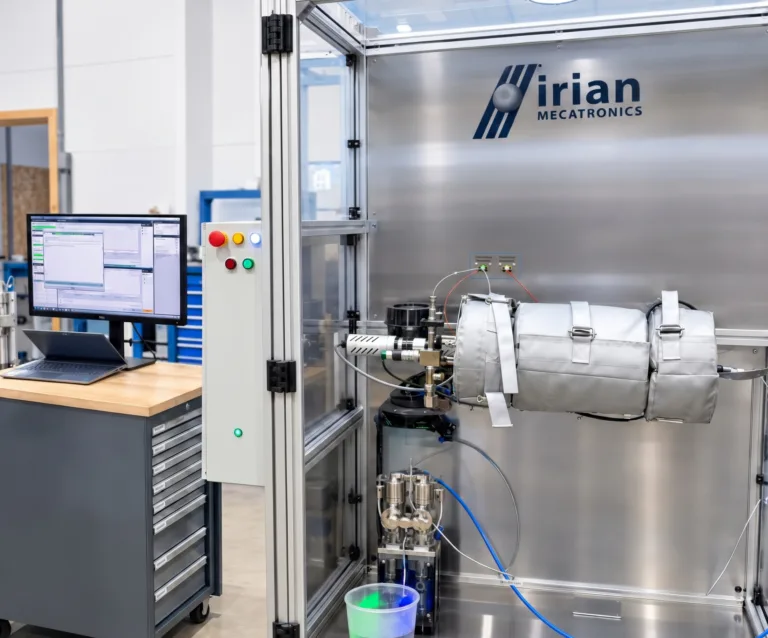
    Each piece of equipment is assembled and tested in our workshop in Morlaàs. Factory acceptance tests (FAT) validate its compliance with the specifications before delivery. We can then provide on-site commissioning and training for your teams, as well as future maintenance and upgrades.

Our custom reactors are often integrated into process pilot plants or hydrogen and ATEX test benches. Their design addresses specific challenges such as HPHT corrosion testing, high-pressure visualization, or geoscience applications.

They trust us

  • CNRS
  • CEA
  • BRGM
  • Ifremer
  • EDF
  • TotalEnergies
  • Michelin
  • CETIM
  • Centrale Lille
  • Université de Pau et des Pays de l'Adour
  • Sonatrach
  • Saudi Aramco
  • Nanchang University
  • Adisseo
  • Lafarge
  • MDS
  • MIO – Mediterranean Institute of Oceanography
  • IRT Saint Exupéry
  • IRD – French National Research Institute for Sustainable Development
  • Groupe INSA
  • Aix-Marseille Université
  • logo-icmcb

04 — FAQ

Frequently asked questions

My protocol involves highly aggressive fluids (H₂S, acids, brines) at high temperature. How do you guarantee the reactor's service life and prevent contamination of my tests?

We ensure corrosion resistance by selecting the most suitable material for your operating conditions. Our engineering team analyzes the fluid composition, pressure, and temperature to choose the right grade from stainless steels, nickel alloys (Hastelloy, Inconel), titanium, or other high-grade materials. The choice of elastomers for the seals is just as critical. This materials expertise, validated by experience and calculations, ensures the chemical inertness and longevity of the equipment.

I need to integrate specific features: high-torque stirring, optical access for spectroscopy, or special sampling ports. How do you handle these requests?

We integrate these features by custom-designing the vessel and especially its lid, which serves as a technical platform. We adapt proven solutions like magnetic drives for stirring, sapphire viewports for optics, or specific valves for sampling. If a standard solution does not exist, we design the necessary interfaces and components to meet the exact requirements of your experimental protocol, always guaranteeing sealing and safety.

My tests use hydrogen under high pressure. What is your approach to safety and ATEX compliance?

Our approach to safety is systematic and integrated from the very beginning of a project. We start with a detailed risk analysis to identify all potential scenarios. The mechanical design complies with the PED, and the overall architecture follows ATEX directives. We integrate active safety features (sensors, alarms, forced ventilation) and passive ones (rupture discs, containment) to control the risk. The complete technical file we provide allows you to ensure the regulatory compliance of your installation.

I don't see any equipment that matches my pressure and temperature requirements. What are your limits?

Our limits are not defined by a catalog, but by the physics and technical feasibility of your project. Our approach starts with your need to design the solution, not the other way around. As an example, we have built cells that withstand 1,200 bar (17,400 psi) and reactors that operate at 500°C (932°F). The starting point is always a feasibility analysis by our engineering team to assess the constraints of your specifications and propose a robust and safe design.

Does your experimental protocol exceed the capabilities of standard reactors?

Let's discuss your pressure, temperature, corrosion, or geometry constraints. Our engineering team can assess your project's feasibility and propose a custom technical solution.

Discuss your project