Skip to content

HPHT corrosion testing

High-pressure, high-temperature (HPHT) corrosion test autoclaves

We design and build autoclaves, reactors, and test rigs for engineers and researchers who need to qualify material performance. Our equipment reliably reproduces the most aggressive environments over long durations: high pressure, high temperature, and exposure to H₂S, wet CO₂, brines, or acids.

01 — The problems we solve

Your corrosion challenges, our solutions

Qualifying a material's resistance under HPHT conditions presents specific technical challenges. Each piece of equipment is an instrumented solution designed for a precise experimental protocol.

Testing a material in an extremely corrosive HPHT environment

The challenge is to ensure the chemical inertness of the pressure vessel. The autoclave must neither degrade nor leach ions that would skew the measurement. The choice of materials (nickel alloys, titanium) and sealing technology is therefore determined by the combination of pressure, temperature, and the fluid's chemical aggressiveness.

Delivered for

See the 4 projects ↓

Comparing materials and conditions over the long term

For a valid comparison of samples, stable and identical HPHT conditions must be maintained across several independent stations for weeks or months. The system must ensure stable control, safety without constant supervision, and the absence of any cross-contamination between tests.

Delivered for

See the 2 projects ↓

Injecting and controlling corrosive fluids with precision

The pumping system must provide a stable flow rate or pressure without being degraded by the fluid. The design therefore requires all wetted parts (pump body, piston, seals) to be made of chemically resistant materials, while still providing the precision required for the test.

Delivered for

See the 3 projects ↓

02 — Custom-built

Custom design for your protocols

When off-the-shelf equipment cannot perform a test, we design a technical solution that meets the constraints of the experimental protocol.

Corrosion autoclaves and reactors

To test a material under non-standard pressure, temperature, and chemical conditions, we design the autoclave around your needs. The volume, material, agitation type, closure, and specimen holders are defined for each project.

Volume, material (Inconel, Hastelloy, Titanium...), pressure, temperature, agitation type, closure type, and specimen holders are defined for each project.

Multi-station test rigs

To compare several samples or conditions in parallel, a multi-station rig shares safety systems and peripherals. This approach increases test throughput and ensures the comparability of results within a controlled footprint.

The number of stations, the control and measurement systems (per-station or centralized), and the shared safety features are adapted to the experimental protocol.

03 — Measurements

Measured and monitored parameters

The equipment is designed to integrate the instrumentation needed to understand the corrosion phenomenon under study.

Pressure, temperature, exposure time

These are the fundamental parameters that define the conditions of the corrosion test. Their precise control and continuous recording are the basis for the experiment's reproducibility.

Electrochemical potential and current

Integrating electrodes into the autoclave makes it possible to monitor corrosion rates in-situ and identify the mechanisms involved. These real-time measurements eliminate the need to interrupt the test to analyze the sample.

Fluid composition

Sampling fluid under pressure and at temperature allows for tracking changes in the corrosive medium or quantifying the release of ionic species from the material over time.

Specimen observation

Post-mortem analysis of the specimens (mass loss, surface microscopy, chemical analyses) remains the final measurement that quantifies the effects of corrosion after a controlled exposure.

04 — Projects

Examples of equipment for corrosion studies

9 projects

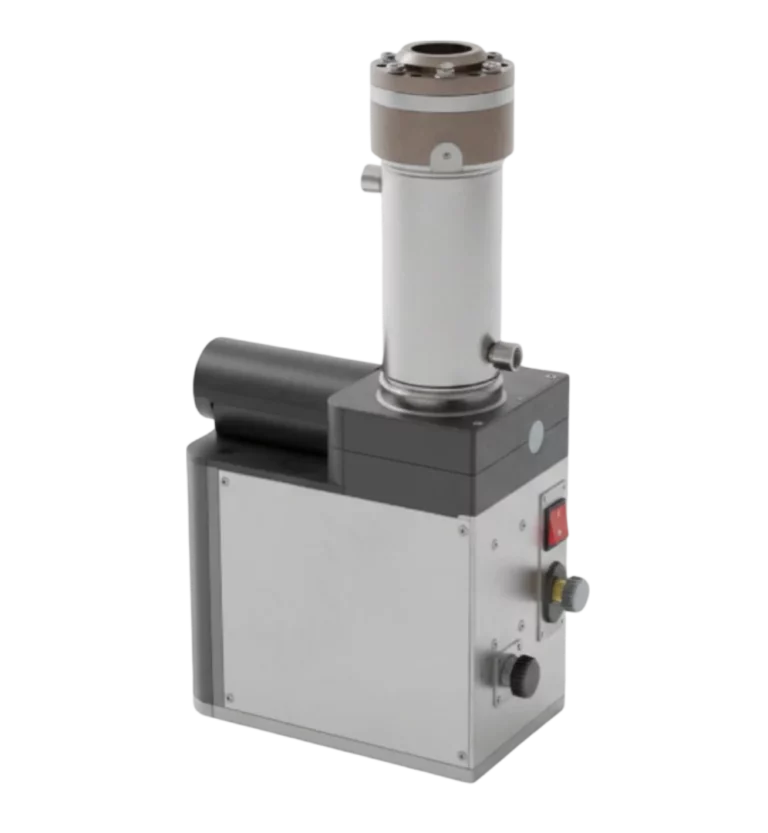
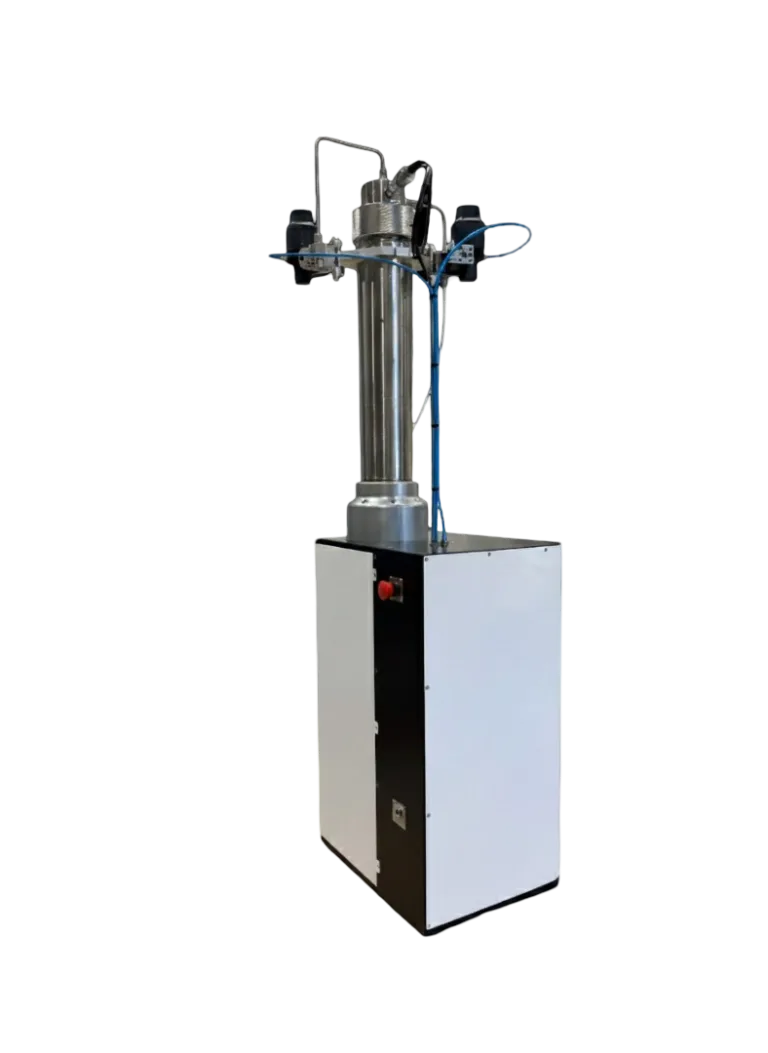
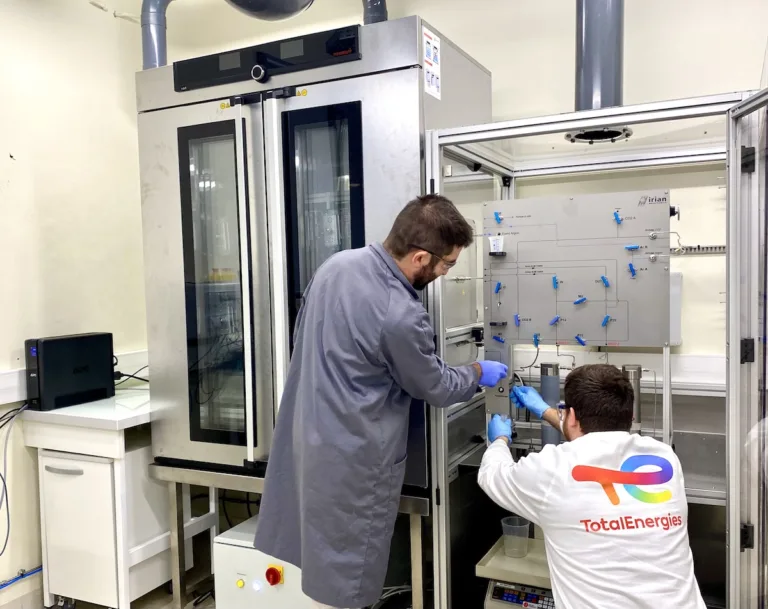
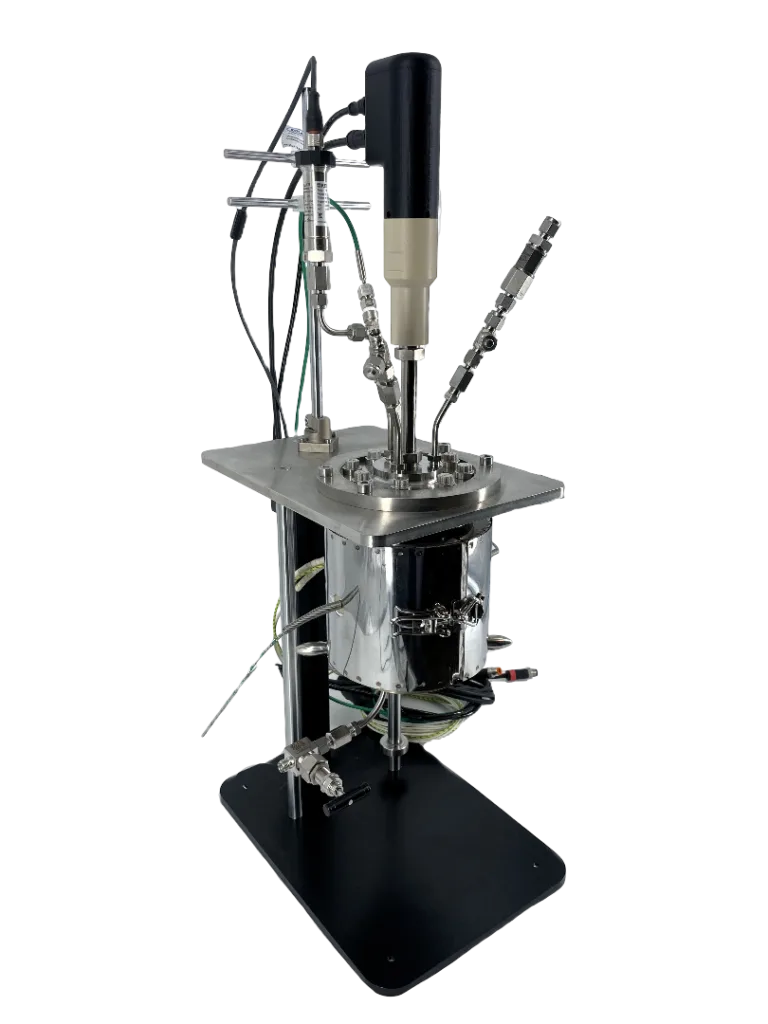
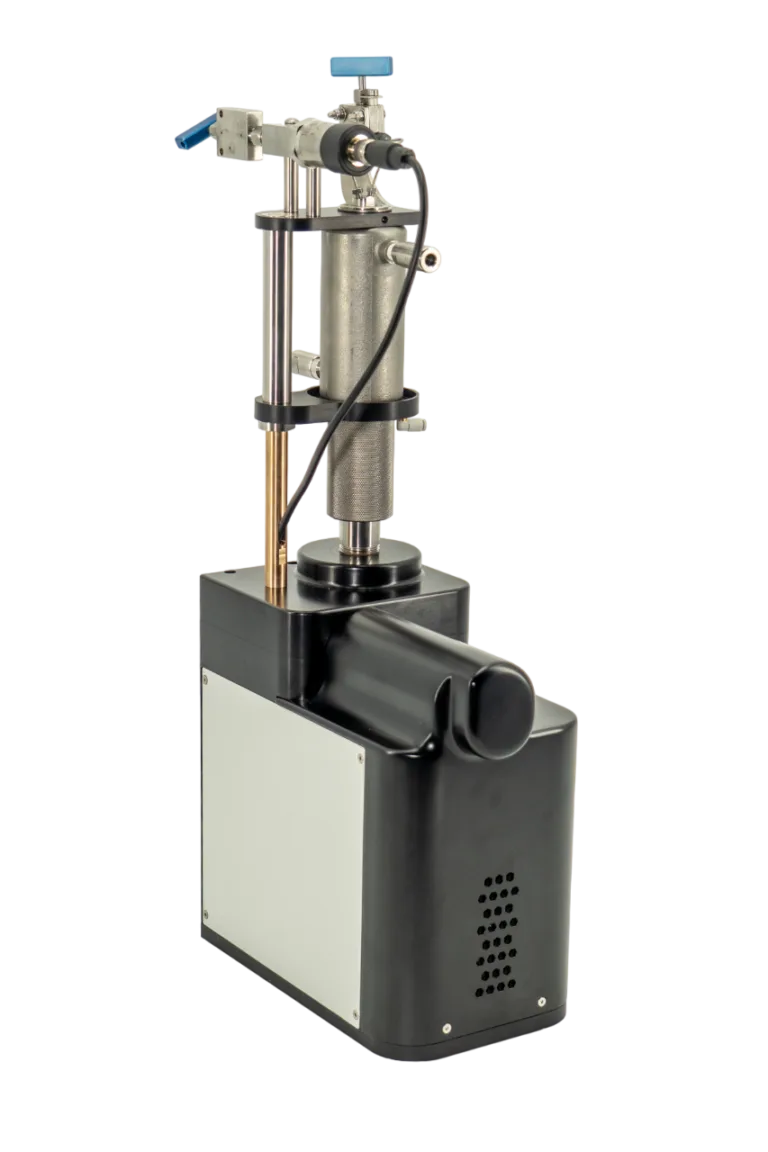
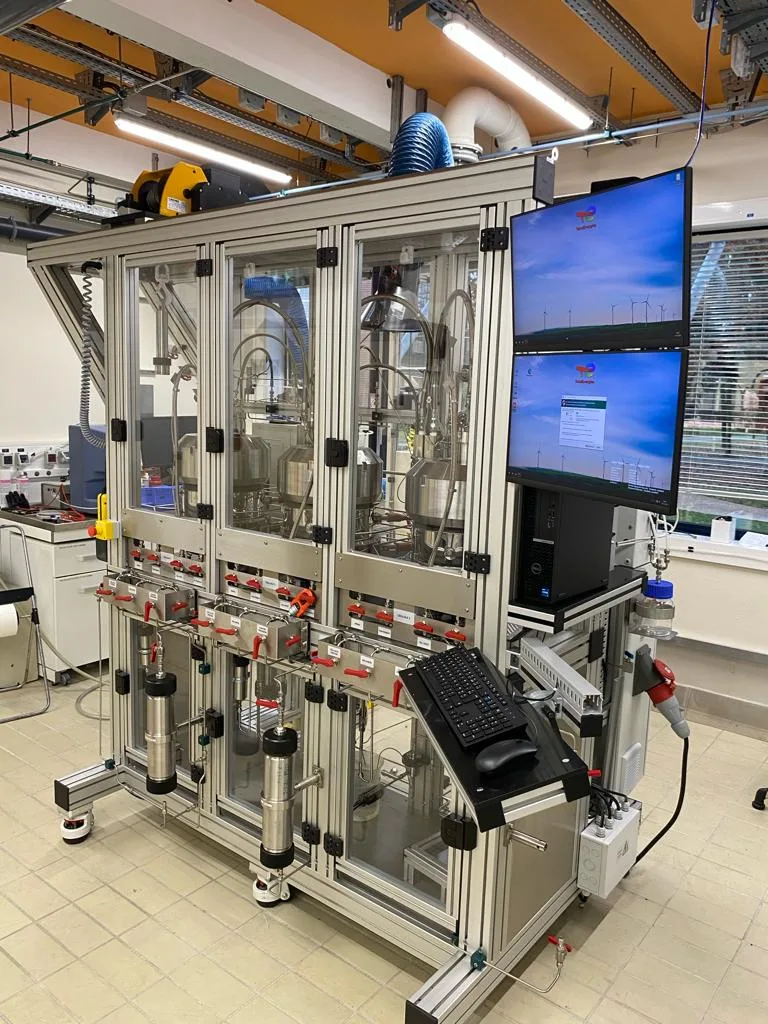
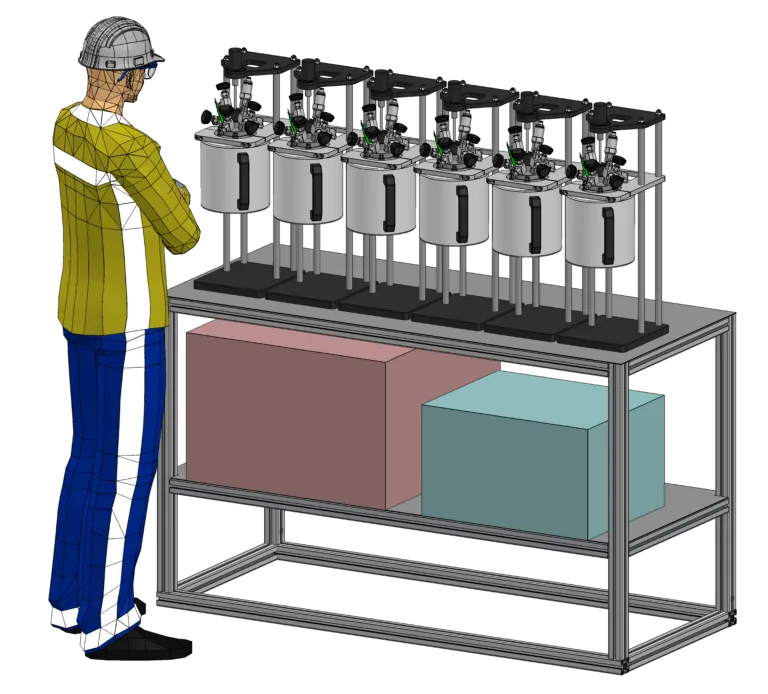
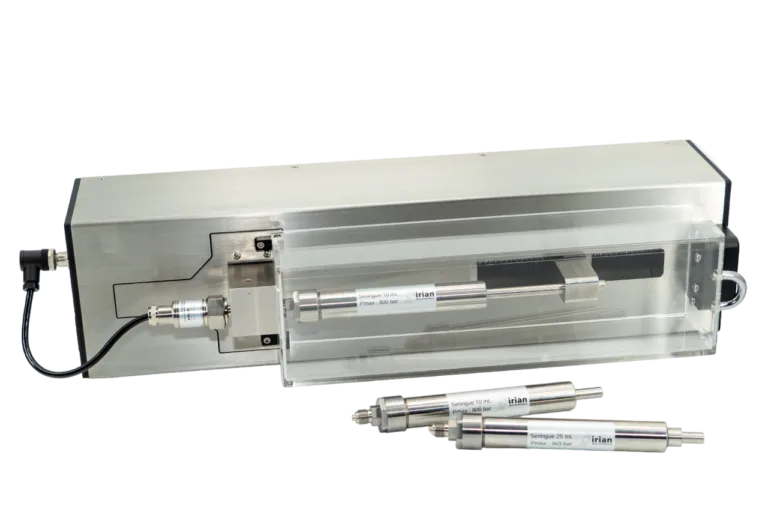
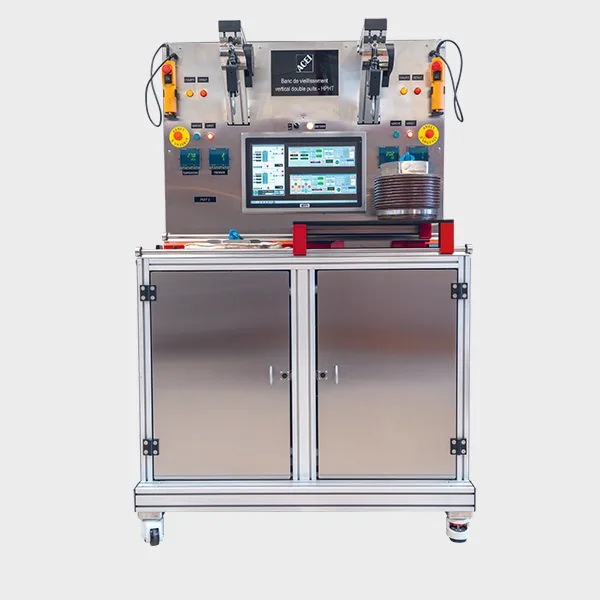
3D view of a motorised 50 mL variable-volume cell rated for 500 bar Fluid Dynamics & Phase Behavior 500 bar / 150°C Titanium Variable Volume Cell for HP Fluid Research Design of a 50 mL titanium HPHT cell for studying fluid phase behavior at 500 bar / 150°C. A custom solution that integrates magnetic… Custom 15 bar volumetric pump for 98% sulfuric acid Precision Pumps & Injection Systems 2L / 15 bar Volumetric Pump for 98% Sulfuric Acid Injection 2L / 15 bar volumetric pump for 98% sulfuric acid (H₂SO₄) injection. Expertise in Super Duplex and FKM materials. Engineers integrating a frame with several high-pressure cells in the client's laboratory Geoscience & Subsurface Studies Mastering Carbonic Corrosion at 140 bar: Engineering a Hastelloy C-276 Characterization Rig Custom multi-sample test rig for permeability measurement under extreme conditions (140 bar, 130°C). Its Hastelloy design ensures measurement integrity against a highly corrosive fluid… HPHT reactor in Inconel 625 for corrosion testing, on its laboratory stand HPHT Reactors & Cells 500°C / 130 bar Corrosion Test Reactors for Materials Research For IFPEN, we designed two reactors (500°C, 130 bar) for corrosion testing. The Inconel 625 solution withstands oxidizing gases at very high temperatures. Compact high-pressure volumetric pump on its motor base Extreme Environment Simulation Systems 12CC 600 bar Volumetric Pump for Pressure Control in Corrosive Media (Na2S) for CNRS For the CNRS (Bacterial Chemistry Lab), we designed this 600 bar pump. It provides precise pressure regulation for a 500 µL observation cell. Multi-reactor high-pressure test bench with supervision screens, installed in the laboratory Geoscience & Subsurface Studies Multi-Cell 400 bar / 250°C Test Bench for Formation Damage Analysis For an energy leader, this multi-cell bench (400 bar, 250°C) simulates formation damage from drilling fluids, including corrosive acids (HCl). Hydrogenation test bench with six reactors, 3D view with operator for scale Geoscience & Subsurface Studies Custom Hastelloy C276 HPHT Reactor System for Geoscience Research For geoscience research, we designed this bench of 6 HPHT reactors. The use of Hastelloy C276 ensures maximum resistance to corrosive fluids. 800 bar high-pressure syringe driver, transparent cover and spare syringes Extreme Environment Simulation Systems Custom 800 bar High-Pressure Syringe Pump in Hastelloy C-276 for Origin-of-Life Research For the ICMCB (CNRS), we designed these 800 bar syringe pumps in Hastelloy. They simulate hydrothermal vents by injecting corrosive fluids with extreme stability. Dual-well HPHT ageing bench with touchscreen control Geoscience & Subsurface Studies 1380 bar HPHT Aging Bench: Simulating Extreme Conditions for Cement and Fluids This accelerated aging test bench is designed to assess material durability under user-defined temperature and pressure constraints in a controlled environment.

05 — Our approach

Our approach: from your test to the equipment

Designing custom equipment is a dialogue between your scientific expertise and our engineering. Each project follows three key steps to ensure the final rig precisely meets the experimental need.

  1. Understanding the phenomenon

    Our starting point is always the scientific question: what type of corrosion is being studied (general, pitting, stress corrosion cracking...), in what environment, and on what material? This initial understanding guides the first technical choices and helps identify the key parameters to control.

  2. Identifying the test's challenges

    We then analyze the constraints that make the experiment difficult. Is it the need to run for several months, reproduce a flow, track kinetics in real time, or handle particularly hazardous substances? This analysis defines the equipment's functional requirements specification.

  3. Designing the equipment as a solution

    The test rig is the technical answer to these challenges. The choice of materials, number of stations, type of agitation, and instrumentation are defined to enable the intended test. The equipment is delivered as a complete, tested, and ready-to-use system.

Our equipment is used in many research fields, including extreme environment simulation, geoscience, and fluid dynamics. The precise injection of corrosive fluids is handled by our HPHT injection systems.

They trust us

  • CNRS
  • CEA
  • BRGM
  • Ifremer
  • EDF
  • TotalEnergies
  • Michelin
  • CETIM
  • Centrale Lille
  • Université de Pau et des Pays de l'Adour
  • Sonatrach
  • Saudi Aramco
  • Nanchang University
  • Adisseo
  • Lafarge
  • MDS
  • MIO – Mediterranean Institute of Oceanography
  • IRT Saint Exupéry
  • IRD – French National Research Institute for Sustainable Development
  • Groupe INSA
  • Aix-Marseille Université

06 — FAQ

Frequently asked questions

What determines the cost of a corrosion autoclave?

The cost of an equipment primarily depends on five factors. The first is the alloy used: Hastelloy or Inconel is significantly more expensive than stainless steel. Next are the vessel's volume, the target pressure/temperature rating, the number of test stations to integrate into the rig, and finally, the level of instrumentation and automation required for test control.

Can your equipment be used for tests with H₂S?

Yes, we design equipment for tests in the presence of acid gases like hydrogen sulfide (H₂S) or CO₂. The design for this type of application, known as 'sour service,' is critical. The choice of materials, such as nickel alloys (Inconel, Hastelloy), and the selection of sealing technologies are made specifically based on the gas concentration, pressure, and temperature of the test.

Is it possible to visualize corrosion during the test?

Direct visualization under corrosive HPHT conditions is technically very complex. The most reliable method for real-time monitoring is indirect, via in-situ electrochemical measurements. For very specific needs, integrating sapphire windows can be considered, but their chemical resistance must be rigorously validated to be compatible with the experimental environment.

How do you ensure safety over long durations?

Safety is integrated from the design stage and operates on multiple levels. Each rig is equipped with passive hardware safeties, such as rupture discs or relief valves. These are supplemented by active software safeties (alarms, interlocks, emergency shutdown procedures). For long-term, unattended tests, the systems are designed to enter a safe state autonomously in case of a parameter drift or component failure.

Need to qualify corrosion under specific conditions?

Let's discuss your experimental protocol and project constraints. Our engineering team can assess feasibility and propose a suitable technical solution.

Discuss your project