Skip to content

Extreme environment simulation

Recreating extreme conditions in the laboratory

We design equipment to recreate and control the most inaccessible environments in the laboratory: deep sea, explosive atmospheres, or the vacuum of space. For researchers and engineers, we make it possible to study phenomena, qualify instruments, and validate processes under conditions that standard equipment cannot reproduce.

01 — The problems we solve

Your tests in extreme conditions

Do you need to run a test under non-standard pressure, temperature, or safety conditions? Find your situation to see the solutions we have built.

Recreate an extreme natural environment in the lab

Deep sea, hydrothermal vents: pressure, cold or heat and the chemistry of the medium have to be recreated together, often for weeks. Materials must not contaminate the sample, whether biological or mineral.

Delivered for

See the 4 projects ↓

02 — Custom-built

Equipment designed for each environment

When the constraints are unique, so is the solution. Each system is defined to meet specific experimental requirements.

Deep-sea simulation test benches

To recreate the deep-sea environment over long periods, we design test benches that ensure stable conditions and prevent sample contamination. The choice of materials, such as titanium, is essential to preserve the integrity of biological or corrosion studies.

Pressure, temperature, cell volume, materials (titanium), test duration.

Instrument qualification vessels

We develop custom vessels to protect a sensor or instrument from a hostile environment for which it was not designed. The design ensures isolation (pressure, corrosion) while maintaining measurement capability and providing sealed feedthroughs for power and signals.

External pressure, sealed feedthroughs for signals and power, sensor protection.

Autoclaves and test benches for flammable gases

To operate safely with fluids like hydrogen, ATEX compliance is integrated into the entire system. We go beyond the component level to design the ventilation, leak detection, and safety automation that protect operators and the laboratory.

ATEX design, leak detection, ventilation, loading ergonomics.

Modules and skids for space applications

For microgravity applications, we develop compact, autonomous fluidic systems that are insensitive to orientation. The design ensures injection accuracy and reliable onboard control, meeting the mass and size constraints of space systems.

Compactness, autonomy, injection accuracy, onboard control.

03 — Measurements

Key measurements in environment simulation

Each test bench includes the necessary instrumentation to control the experiment, ensure safety, and quantify the phenomena under study.

Long-term pressure and temperature

Continuous monitoring of pressure and temperature validates the stability of the simulated environment. This data is essential to correlate observations, sample transformations, or an instrument's behavior with the exact test conditions.

Injected volumes and flow rates

Precise control of the fluid quantities introduced into the system is fundamental, especially for kinetics or phase behavior studies. Our systems ensure the repeatability and accuracy of injections, even at very high pressure.

Pressurized sampling

To monitor the evolution of a reaction or a biological sample without disturbing the experiment, we integrate isobaric sampling systems. They allow a portion of the medium to be extracted for analysis without causing depressurization or alteration.

Measurements from qualified instruments

The purpose of a qualification vessel is to validate the operation and accuracy of an instrument in its future service environment. The measurement it produces is therefore the primary data, compared to reference measurements to validate its performance.

Gas detection, alarms, and event history

On ATEX test benches, safety is a measurement in itself. Gas detection, alarm thresholds, and the logging of every event by the controller ensure operator protection and full traceability in case of an incident.

04 — Projects

Our projects in extreme environment simulation

7 projects

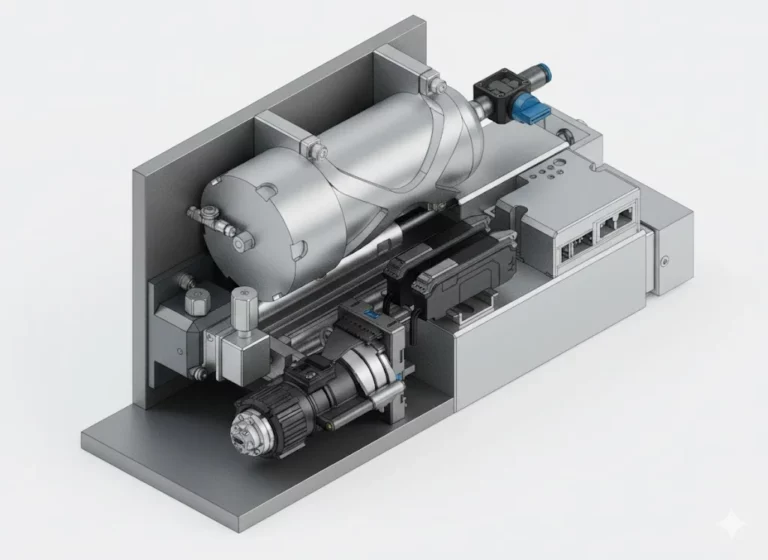
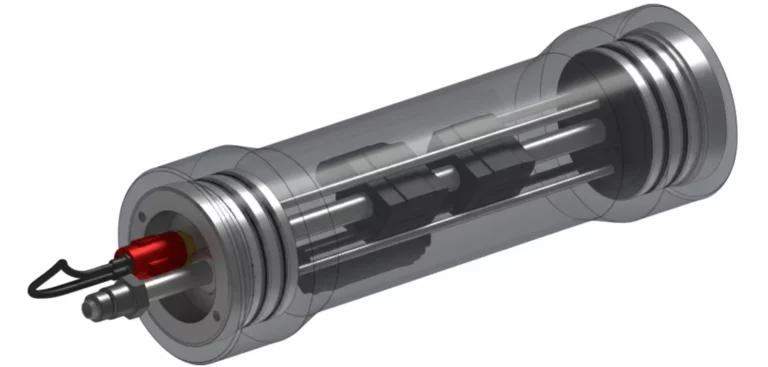
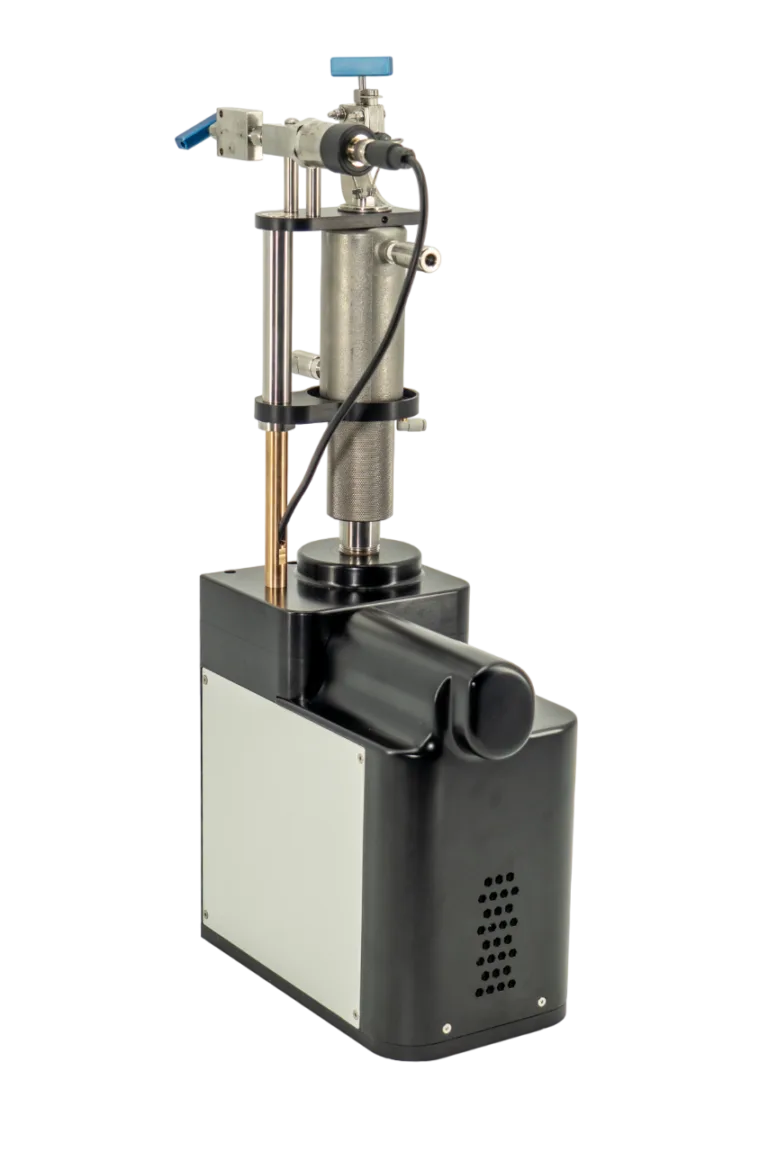
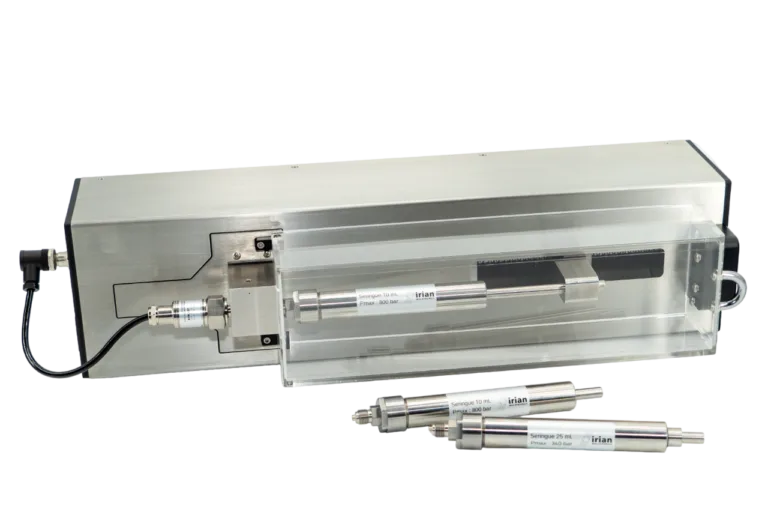
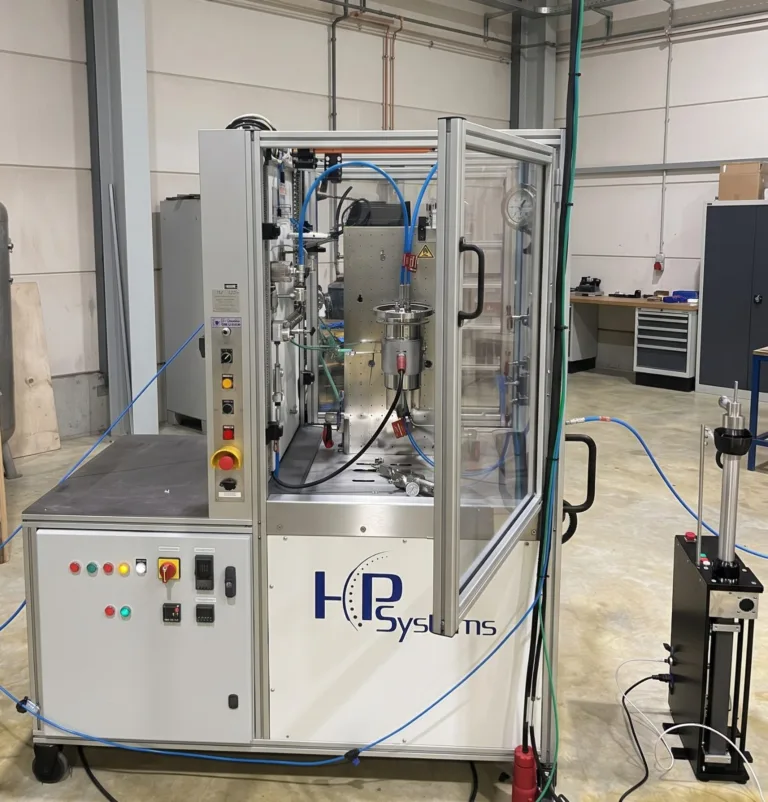
Banc d'essai haute pression avec le bioréacteur et le système de régulation Extreme environment simulation systems High-Pressure Bioreactor Retrofit: Reliable Operation at 10 000 Psi in Corrosive Media Retrofit of a test rig for marine environment research. We integrated a syringe pump and a dome-loaded back-pressure regulator to improve the pressure control… 300 bar precision pump module for microgravity research Extreme environment simulation systems High-pressure injection skid for microgravity process control We designed a multi-fluid injection skid for an aerospace research partner's supercritical water oxidation (SCWO) reactor. Operating in microgravity, the system delivers precise, programmable… Design drawing of the flowmeter marinised for 6000 m depth, showing the pressure housing Extreme environment simulation systems Marinized 6000m flowmeter: qualifying measurement in extreme environments for oceanographic research 6000m flowmeter for marine research. A HP housing protects a non-intrusive sensor for reliable deep-sea measurement. Extreme environment simulation systemsConfidential project · photo withheld Extreme environment simulation systems High-pressure autoclaves for flammable gas (ATEX) testing high-pressure autoclave benches for flammable gases (H2). Features full ATEX safety integration and ergonomic handling. Deep-sea simulation test bench (1000 bar, 2 °C) with titanium cells and high-pressure pumps Extreme environment simulation systems 1000 bar high-pressure test bench with dual titanium cells for deep-sea environment simulation For the CEREGE (CNRS) laboratory, we designed a Titanium test bench to simulate extreme deep-sea conditions (1000 bar, 2°C) for studying microorganisms. Compact high-pressure volumetric pump on its motor base Extreme environment simulation systems 12CC 600 bar volumetric pump for pressure control in corrosive media (Na2S) for CNRS For the CNRS (Bacterial Chemistry Lab), we designed this 600 bar pump. It provides precise pressure regulation for a 500 µL observation cell. 800 bar high-pressure syringe driver, transparent cover and spare syringes Extreme environment simulation systems Custom 800 bar high-pressure syringe pump in Hastelloy C-276 for origin-of-life research For the ICMCB (CNRS), we designed these 800 bar syringe pumps in Hastelloy. They simulate hydrothermal vents by injecting corrosive fluids with extreme stability.
05 — Our approach

From your need to your custom test bench

We develop each piece of equipment as a unique project, in close collaboration with your team, to ensure it precisely meets your scientific and technical objectives.

  1. Analyze and design

    Our engineering team translates your research problem and experimental constraints into a technical solution. This phase is crucial for defining the fluidic architecture, selecting materials resistant to extreme conditions (corrosion, pressure), and designing the control and safety system.

  2. Manufacture and test at our facility (FAT)

    The equipment is fully assembled, wired, and programmed in our workshop in Morlaàs. We then conduct the factory acceptance test (FAT) with you to validate every feature and ensure the test bench fully conforms to the specifications before shipment.

  3. Install and support

    Our teams handle the commissioning of the equipment at your site and train your operators on its use and safety procedures. We then remain available for preventive or corrective maintenance to ensure your system's long-term performance.

For specific applications, see our pages on hydrogen and ATEX test benches, HPHT corrosion testing autoclaves, or our equipment for geoscience and subsurface studies.

They trust us

  • CNRS
  • CEA
  • BRGM
  • Ifremer
  • EDF
  • TotalEnergies
  • Michelin
  • CETIM
  • Centrale Lille
  • Université de Pau et des Pays de l'Adour
  • Sonatrach
  • Saudi Aramco
  • Nanchang University
  • Adisseo
  • Lafarge
  • MDS
  • MIO – Mediterranean Institute of Oceanography
  • IRT Saint Exupéry
  • IRD – French National Research Institute for Sustainable Development
  • Groupe INSA
  • Aix-Marseille Université
  • logo-icmcb

06 — FAQ

Frequently asked questions

How do you ensure the integrity of a biological sample for several weeks at 1,000 bar (14,500 psi)?

Sample integrity is ensured by selecting completely inert materials, such as titanium, which prevent any metallic contamination or corrosion. The pressure and temperature control is designed for very long-term stability, while isobaric sampling systems allow for intermediate analyses without ever decompressing the sample.

How do you integrate a commercial sensor into a high-pressure vessel without distorting its measurement?

We design a custom vessel that isolates the sensor from external stresses while preserving the integrity of its measurement. For example, a sapphire window is used for an optical sensor. The feedthroughs for power supply and signal transmission are specifically developed to ensure a perfect seal at the operating pressure.

What is your safety standard for ATEX test benches?

Our approach to ATEX safety is comprehensive and not limited to a single certified component. We integrate safety at the test bench level: mechanical design preventing retention zones, controlled ventilation to dilute any potential leaks, multi-point gas detection, and a dedicated safety controller that autonomously manages emergency shutdown procedures.

Can your systems operate fully autonomously for onboard applications?

Yes, our systems for space or mobile applications are designed for full autonomy. We develop compact, lightweight modules with onboard control. Their fluidic architecture is designed to be insensitive to orientation, vibrations, and accelerations, ensuring reliable and accurate operation without any human intervention.

Does your test combine constraints that standard catalogs don't cover?

Describe the phenomenon you want to reproduce. Our engineering team will analyze your specifications to design the equipment that will allow you to control it.

Discuss your project