

Case study · Extreme environment simulation systems
Custom 600 bar pump for stable pressure control in micro-volumes with corrosive fluids
For a French public research laboratory, IRIAN Mecatronics designed and built a custom high-pressure pump. The equipment generates and maintains a highly stable 600 bar (8700 psi) pressure in a 500-microliter volume, handling corrosive fluids with precise temperature control.
01 — The research question
How to control pressure or flow rate with high stability in a very small volume, especially with aggressive fluids?
Generating stable pressure in a circuit is a common problem, but it becomes critical when the volume is very small. In a few hundred microliters, the fluid is nearly incompressible: the slightest change in volume, whether from mechanical deformation or a temperature fluctuation, causes a major pressure excursion that can ruin a measurement or destroy a sample. On top of this, chemical compatibility or handling requirements often fall outside standard specifications.
Our client needed to maintain a 600 bar (8700 psi) pressure in a 500 µL observation cell to study corrosive fluids (saltwater, sodium sulfide) between 0°C (32°F) and ambient temperature. No standard pump, whether HPLC or syringe-type, could combine this high pressure, very low volume, strict chemical compatibility with Na2S, temperature control, and the ability to fill part of the system in a glovebox. This is where custom injection solutions become essential.
To ensure stable pressure control at 600 bar in a nearly incompressible volume, where the slightest thermal variation or mechanical strain disrupts the measurement, while guaranteeing material integrity against a corrosive fluid.
02 — Our approach
Designing a high-pressure pump for micro-volumes
Our engineering team analyzed the project's three main challenges: the precision of the pressure control, the chemical compatibility of the materials, and the management of temperature. Each design choice addresses a specific application constraint to ensure reliable results.
-
Ensuring fine and safe pressure control
In a 500 µL volume, piston displacement control must be extremely fine. We selected a mechanical transmission with a very high reduction ratio that is inherently non-reversible. This design translates a large motor rotation into a minuscule and therefore highly controlled piston displacement, while physically preventing any backward movement, even during a power outage. The user benefits from a very wide flow rate range (0.002 to 15 cc/min) and a secure experiment.
-
Ensuring chemical compatibility and cleanability
To handle corrosive fluids like Na2S, we manufactured all wetted parts from a single material with proven compatibility, avoiding coatings that could wear off. The reservoir section was designed to be easily detachable and openable, allowing for filling in a glovebox and perfect cleaning between tests. This guarantees both the equipment's durability and the purity of the samples.
-
Controlling fluid temperature to stabilize pressure
A 1°C (1.8°F) temperature change in such a small volume can cause a pressure excursion of several tens of bars. To overcome this, the pump body is temperature-controlled by an external heat-transfer fluid. This approach is more reliable than an integrated system and ensures that the measured pressure depends only on the experiment's parameters, not on ambient temperature fluctuations, similar to our test rigs for extreme environments.
03 — Beyond this project
Does your application also require precise control under difficult conditions?
Pharmaceuticals / Biotechnology
For dosing small volumes of expensive reagents or active ingredients in microreactors, the principles of high-precision volumetric control, ease of cleaning, and material chemical compatibility (316L stainless steel, PEEK...) remain essential.
Energy / CO2 Capture
For studying fluids like supercritical CO2 or amines, the ability to maintain a stable high pressure, thermal regulation, and corrosion resistance are directly transferable. Our reactors for CO2 capture research are based on similar principles.
Materials / Aeronautics
For the controlled injection of resins into molds, precise flow rate control is key. The non-reversibility of the system guarantees that molding pressure is maintained, while software control ensures process repeatability.
04 — Specifications
The values for this project. Every system is custom-built, so they adapt to your requirements.
Show specifications · 600 bar · 12 cc · 0.002 cc/min to 15 cc/min
| Maximum operating pressure | 600 bar |
|---|---|
| Pump volume | 12 cc |
| Flow rate range | 0.002 cc/min to 15 cc/min |
| Fluid temperature range | 0°C to ambient |
| Connection dead volume | Near-zero ('zero dead volume' type) |
IRIAN Mecatronics designs and builds custom high-pressure, high-temperature equipment for research laboratories, technical centres and industry.
About the companyThey trust us






















05 — FAQ
Frequently asked questions
Can this pump operate in constant flow rate mode instead of pressure control?
Yes, absolutely. The system natively controls the volumetric displacement of the piston, which corresponds to a constant flow rate mode. The pressure control mode is a software feedback loop that uses this flow control to reach and maintain a pressure setpoint. The user can therefore choose to operate the equipment in either mode depending on their experimental needs.
Is it possible to reach higher pressures, for example 2,000 bar, with this type of pump?
Yes, the principle of a high-reduction mechanical transmission is perfectly adaptable to higher pressures. Reaching 2,000 bar would require resizing the pressurized parts (body thickness, material choice, seal technology) and the gear motor, which is a standard task for our in-house engineering team. Feasibility depends on the other constraints (volume, fluid, temperature).
Can your system be used with gases or supercritical CO2?
The volumetric control principle is applicable, but the high compressibility of gases and supercritical fluids changes the requirements. The design of the seals becomes more critical, and the pressure control algorithms must account for the fluid's compressibility to ensure stability. Each project involving these fluids undergoes a specific feasibility study.
Can the pump be integrated into an existing test rig and controlled by our own software?
Yes, our equipment is designed to be integrated into existing laboratory environments. We systematically provide communication protocols (e.g., Modbus TCP/IP, serial) and can develop specific drivers (e.g., for LabVIEW) to allow control by an external master software. The mechanical interface and footprint can also be adapted.
Is your experiment limited by the instability of a standard pump in a small volume?
Describe your pressure, volume, and chemical compatibility constraints. Our engineering team will analyze your project's feasibility and get back to you with a proposed custom solution.
Related projects
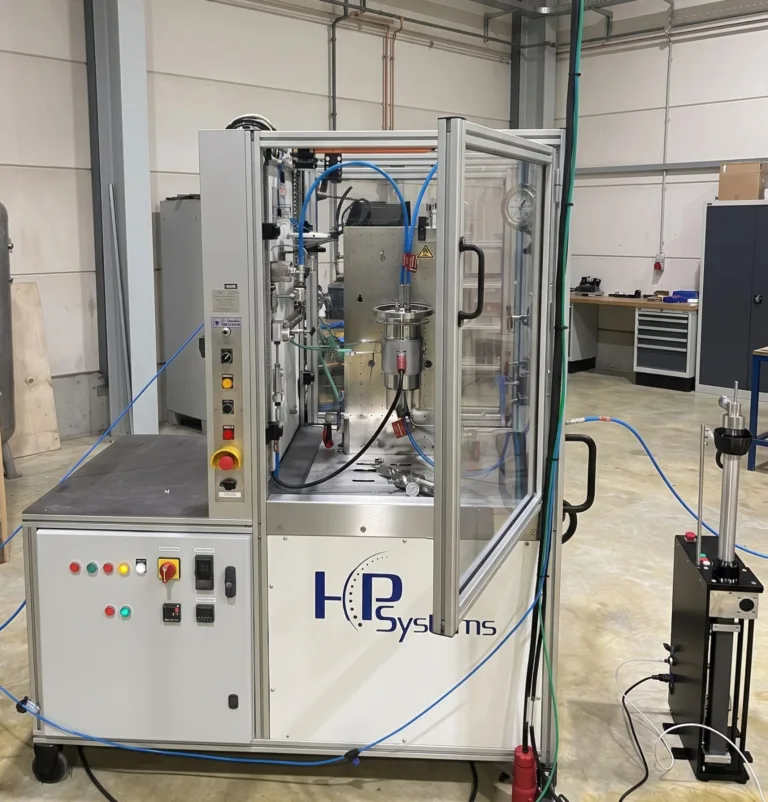 Extreme environment simulation systems
High-Pressure Bioreactor Retrofit: Reliable Operation at 10 000 Psi in Corrosive Media
Extreme environment simulation systems
High-Pressure Bioreactor Retrofit: Reliable Operation at 10 000 Psi in Corrosive Media
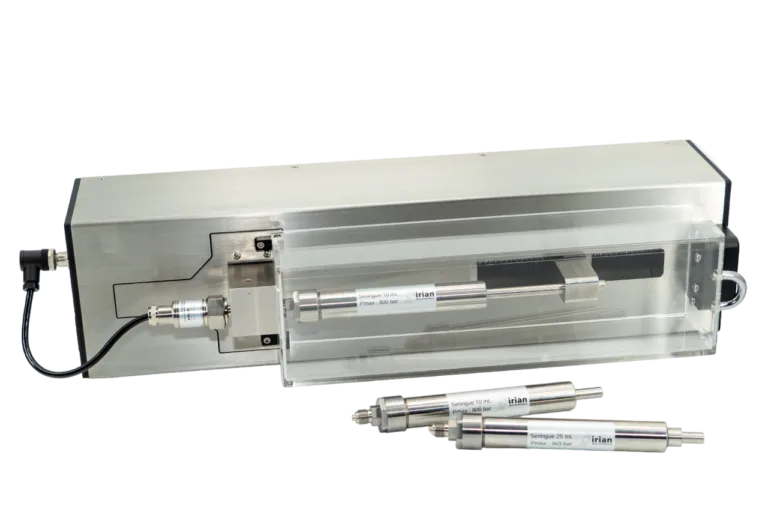 Extreme environment simulation systems
Custom 800 bar high-pressure syringe pump in Hastelloy C-276 for origin-of-life research
Extreme environment simulation systems
Custom 800 bar high-pressure syringe pump in Hastelloy C-276 for origin-of-life research
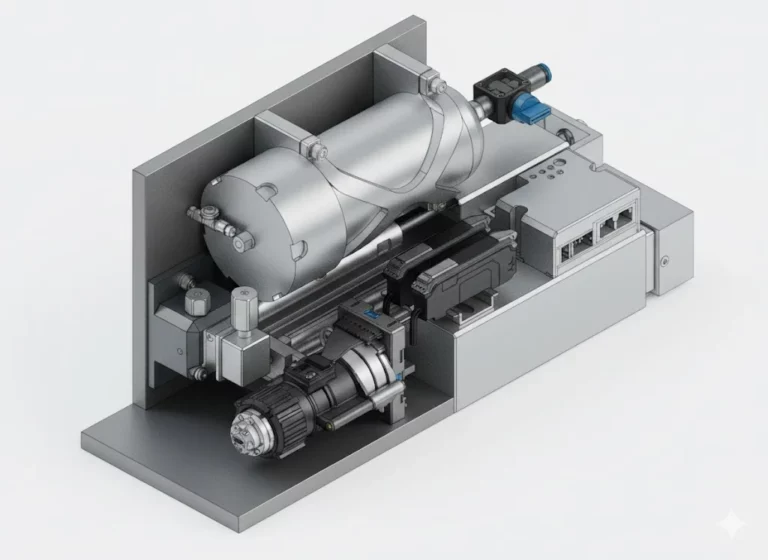 Extreme environment simulation systems
High-pressure injection skid for microgravity process control
Extreme environment simulation systems
High-pressure injection skid for microgravity process control
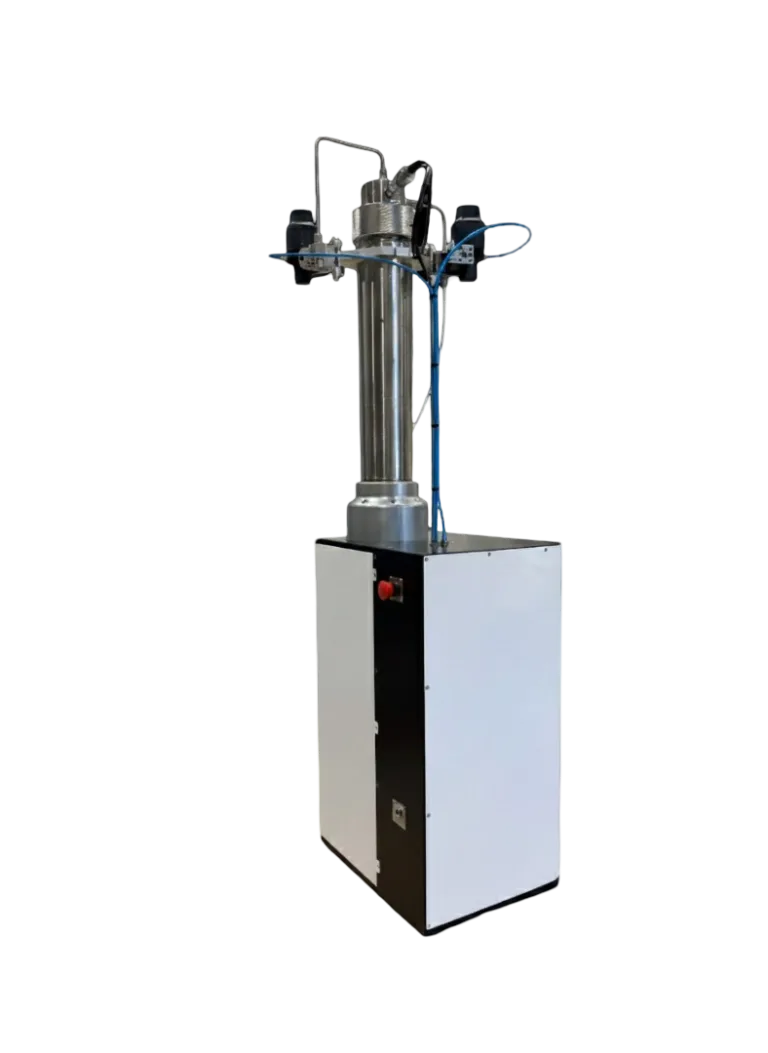 Precision pumps & injection systems
2L / 15 bar volumetric pump for 98% sulfuric acid injection
Precision pumps & injection systems
2L / 15 bar volumetric pump for 98% sulfuric acid injection