Skip to content

Process pilots & chemical development

Process pilots & chemical development: instrumented experimental systems

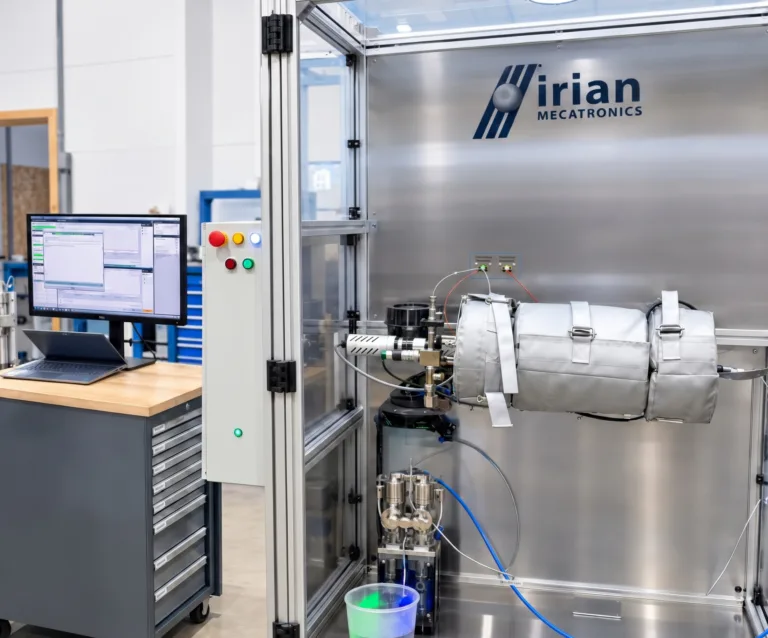
We design and build custom pilot plants and test rigs for process engineers and researchers. Our systems acquire reliable data to develop, de-risk, and scale up complex chemical processes from the lab to the pilot unit, including under extreme conditions.

01 — The problems we solve

Your experimental challenges in process development

Every process has its own challenges. Do you recognize your situation in one of these cards? Discover the solutions we have built to address them.

Get comparable data you can scale up

To compare catalysts or prepare a scale-up, conditions must be stable, measured and repeated from one run to the next. The pilot reproduces the key phenomena of the future plant: heat and mass transfer, hydrodynamics, flow regime.

Delivered for

See the 3 projects ↓

Run reactions under severe conditions

Corrosion, high temperature, milling or stirring under pressure: the reaction imposes its constraints on the vessel. Materials and dynamic seals are chosen so the equipment holds and does not contaminate the reaction medium.

Delivered for

See the 3 projects ↓

02 — Measurements

Data acquisition: key parameters for process development

A pilot plant is first and foremost a measurement instrument. The quality of the collected data determines the success of a development or scale-up project. Here are the parameters our systems can monitor.

Gas and liquid flow rates, pressure, and temperature

Mastering operating conditions is the foundation of reproducibility. Continuous measurement and control of these parameters ensure that each test is conducted under strictly controlled and documented conditions, which is essential for any serious kinetic analysis.

Gas consumption, composition via sampling or online analysis, mass balances

Tracking conversion and selectivity quantifies process performance. Acquiring this data, whether online or through sampling, is essential for calculating yields, building reliable kinetic models, and understanding the underlying reaction mechanisms.

Stirrer torque

In polymerization or crystallization processes, the medium's viscosity is a critical piece of information. Measuring the torque on the stirrer shaft provides real-time data on its evolution and on the mechanical energy actually transferred to the fluid.

Unattended test duration

A pilot plant's ability to operate stably for several days or weeks without intervention is proof of its robustness. This autonomy, enabled by automation, is a necessary condition for validating a process's viability before scaling it up to an industrial level.

03 — Projects

Examples of process pilots and experimental systems

10 projects

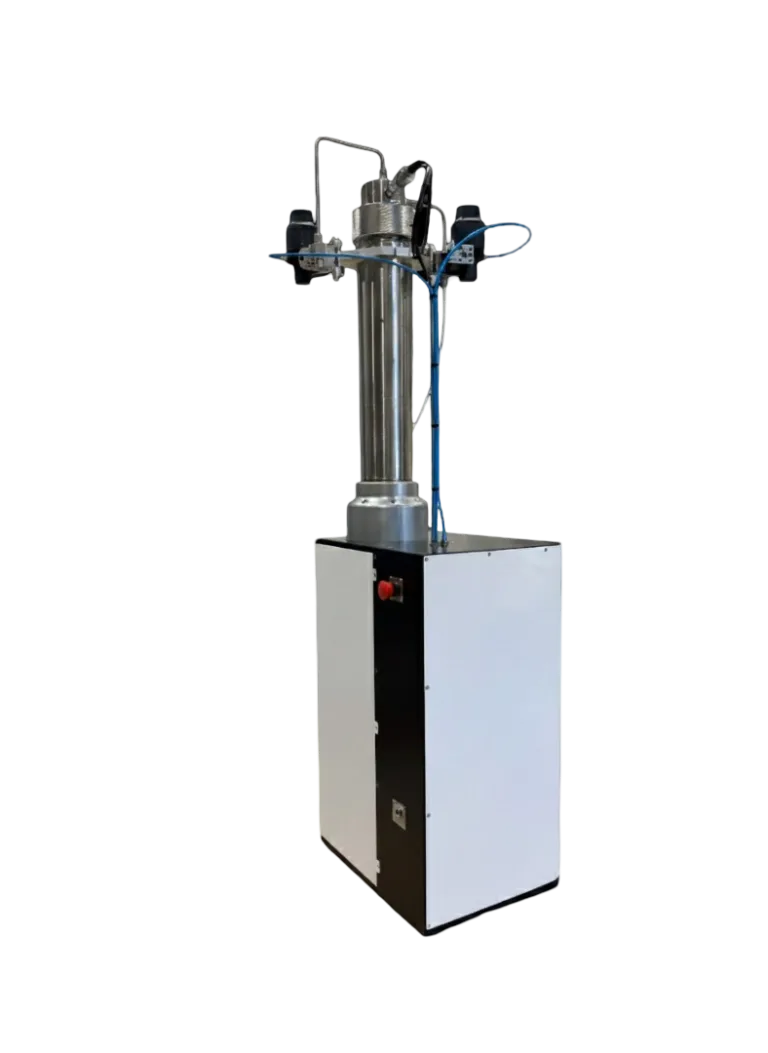
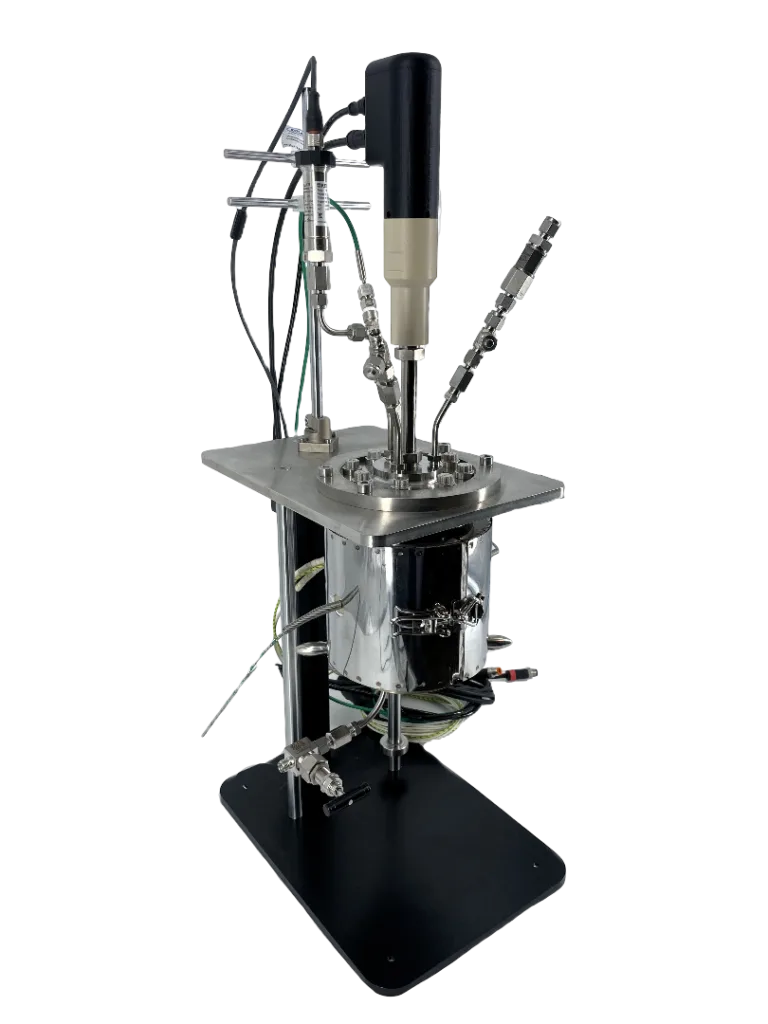
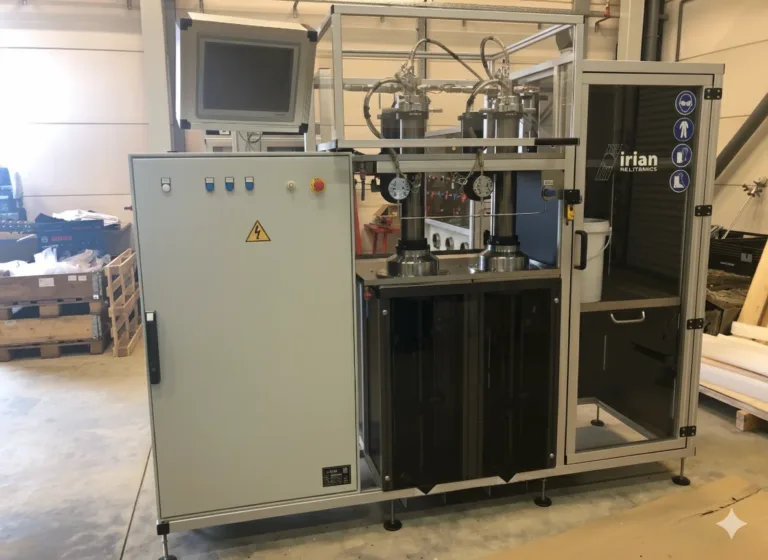
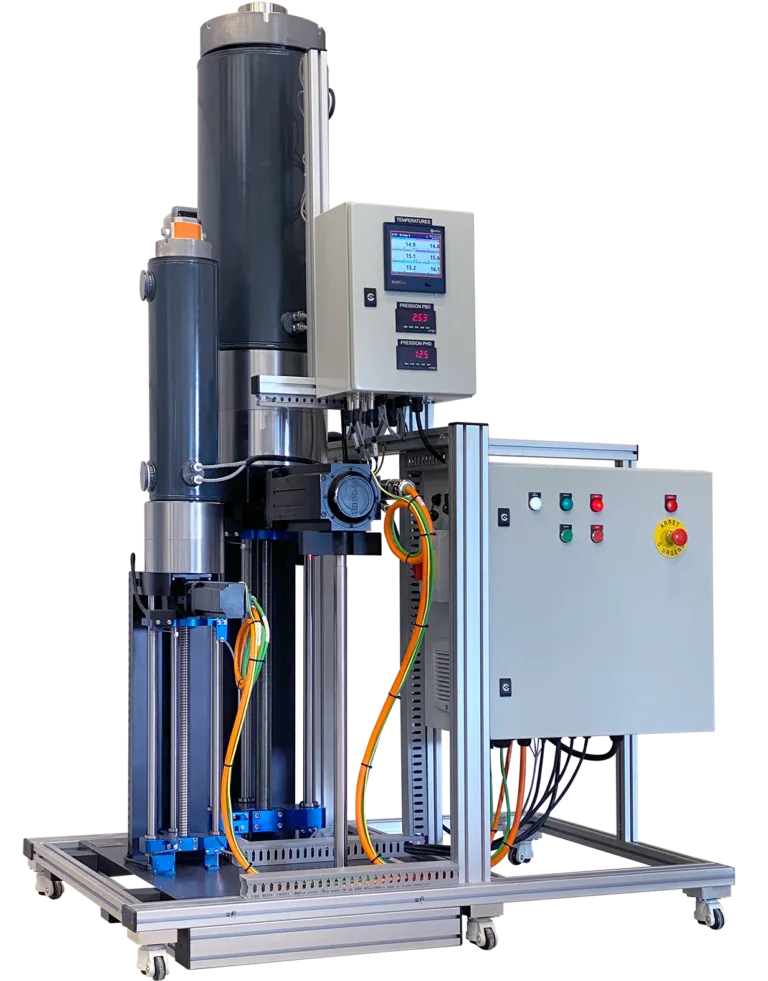
HPHT reactors & cells100 bar350 °C2 LConfidential project · photo withheld HPHT reactors & cells Studying corrosive reactions at 100 bar & 350°C: a custom 2L Hastelloy C276 stirred reactor Design of a 2L pilot reactor in Hastelloy C276 for chemical engineering research. The equipment enables depolymerization reactions up to 100 bar and 350°C,… reacteur rotatif haute pression mecanochimie 3 HPHT reactors & cells Custom high-pressure rotating reactor for mechanochemistry at 250 bar Design of a rotary mechanochemistry reactor for materials chemistry research. This custom equipment enables ball milling in a supercritical CO2 environment, ensuring a perfect… HPHT reactors & cells200 bar300°CConfidential project · photo withheld HPHT reactors & cells Pressurized flow reactor systems for CO2 capture (CCUS) research Reactor platform (Tubular & CSTR) for CO2 capture research (200 bar, 300°C). HPHT reactors & cells200 bar300°CConfidential project · photo withheld HPHT reactors & cells High-pressure continuous flow reactors for gas-liquid process research R&D platform with high-pressure tubular (PFR) and stirred (CSTR) reactors for gas-liquid process studies and catalyst screening. Process development & chemical pilot plantsConfidential project · photo withheld Process development & chemical pilot plants Custom semi-industrial pilot plant for complex fluid process optimization Design of an automated semi-industrial pilot plant for multi-phase fluid process studies, featuring radar interface measurement and ergonomic design. Custom 15 bar volumetric pump for 98% sulfuric acid Precision pumps & injection systems 2L / 15 bar volumetric pump for 98% sulfuric acid injection 2L / 15 bar volumetric pump for 98% sulfuric acid (H₂SO₄) injection. Expertise in Super Duplex and FKM materials. Process development & chemical pilot plantsConfidential project · photo withheld Process development & chemical pilot plants System for automated vessel cleaning in a sensitive environment For a major defense industry player, we designed an automated tank cleaning system for ATEX environments. This solution improves productivity, ergonomics, and operator safety. HPHT reactor in Inconel 625 for corrosion testing, on its laboratory stand HPHT reactors & cells 500°C / 130 bar corrosion test reactors for materials research For IFPEN, we designed two reactors (500°C, 130 bar) for corrosion testing. The Inconel 625 solution withstands oxidizing gases at very high temperatures. 3 L dual syringe injection bench for mixing shear-sensitive fluids Precision pumps & injection systems Custom dual-piston injection pump for mixing complex industrial fluids For a manufacturing leader, we designed a dual volumetric pump (200 bar) for the precision mixing of reactive fluids (polymer, abrasive suspensions). High-flow, high-pressure dual pump skid with control cabinet Precision pumps & injection systems Water meter test bench: automated dual syringe pump for wide flow ranges Dual syringe pump test bench for Sagemcom. Flow range from 1 to 5500 L/h, active thermal regulation, and high metrological precision.
04 — Our approach

Our approach: from scientific need to qualified pilot plant

We design each system as an instrumental answer to a research or development question. Our approach unfolds in three stages, from specifications to commissioning.

  1. Start from the scientific need

    Our design process does not start with a standard product to be adapted, but with the test you need to run. Together, we analyze the phenomenon to be studied, the parameters to be measured, and the experimental challenges to overcome to define the functional specifications of the future equipment.

  2. Design the technical solution

    Our integrated engineering team (mechanical, instrumentation, automation) designs the equipment as a complete system. Each component—reactor, dosing system, measurement chain, safety controller—is selected and integrated to meet the scientific need, in compliance with the Pressure Equipment Directive (PED).

  3. Build, test and commission

    The pilot unit is manufactured and assembled in our Morlaàs workshop, then factory-tested (FAT) against the specification, with you on site or online. We then commission it at your facility, train your operators, and support maintenance and upgrades as your test programmes evolve.

They trust us

  • CNRS
  • CEA
  • BRGM
  • Ifremer
  • EDF
  • TotalEnergies
  • Michelin
  • CETIM
  • Centrale Lille
  • Université de Pau et des Pays de l'Adour
  • Sonatrach
  • Saudi Aramco
  • Nanchang University
  • Adisseo
  • Lafarge
  • MDS
  • MIO – Mediterranean Institute of Oceanography
  • IRT Saint Exupéry
  • IRD – French National Research Institute for Sustainable Development
  • Groupe INSA
  • Aix-Marseille Université
  • logo-icmcb

05 — FAQ

Frequently asked questions

How do you ensure that pressurized samples are representative?

We ensure sample representativeness by designing sampling systems that preserve the reactor's equilibrium. Depending on the process, we integrate airlocks or loops equipped with heated capillary valves. These devices isolate and depressurize an aliquot of the reaction medium without causing flash vaporization or disturbing the main system's conditions, ensuring a reliable composition analysis.

Can we integrate our own online analysis (PAT) instruments?

Yes, the integration of online analysis equipment is planned from the pilot plant's design phase. We work with you to define the necessary mechanical (flanges, nozzles) and software interfaces to connect your in-situ probes (IR, Raman) or external analyzers (GC, MS). The test bench's controller can then synchronize the acquisition of analytical data with process parameters for a comprehensive analysis of the results.

What flow rate stability and accuracy can be expected for fluids?

Flow rate stability is achieved by selecting technologies adapted to each fluid and the kinetics under study. For gases, we use mass flow controllers that ensure precise regulation regardless of pressure variations. For liquids, we favor syringe pumps for very low, pulse-free flow rates, or HPLC-type pumps for higher flow rates, ensuring a continuous and stable feed to the reactor.

How is safety managed for reactions involving flammable gases (H2, etc.)?

Safety is managed through a functional approach, often with a dedicated safety controller independent of the process controller. The system integrates detectors (gas, flame) and redundant sensors. In case of an anomaly, pre-programmed scenarios are automatically triggered: shutting down the heating, closing the reactive gas supply lines, safely venting, and purging the system with an inert gas.

Do you need to develop or instrument a complex chemical process?

Describe your test, the target operating conditions, and the challenges you face. Our engineering team will analyze your needs to propose a proven technical solution.

Discuss your project