
Case study · Extreme Environment Simulation Systems
Mercury-free reservoir fluid analysis: a complete 1000 bar / 200°C PVT laboratory
For a leader in the oil and gas services industry, IRIAN Mecatronics designed and built a complete laboratory for reservoir fluid analysis. The turnkey system characterizes the thermodynamic behavior (PVT, viscosity, density) of samples up to 1000 bar (14,500 psi) and 200°C (392°F).
01 — The research question
How to characterize the thermodynamic behavior of a complex fluid under high pressure and high temperature?
To optimize the production of an oil or gas field, it is essential to have precise knowledge of the thermodynamic behavior of its reservoir fluids. These studies (PVT, Pressure-Volume-Temperature) require reproducing downhole conditions in the laboratory, which can reach hundreds of degrees and over a thousand bars of pressure.
Our client needed a complete laboratory capable of performing the entire analysis chain (from sample preparation to viscosity measurement) at 1000 bar and 200°C.
To guarantee absolute measurement accuracy across a complex analysis chain (PVT, viscosity, density) under extreme conditions, while dispensing with the mercury traditionally used for pressurization and volume measurement.
02 — Our approach
An integrated approach for maximum reliability
The design of this laboratory was based on three key decisions to deliver a complete, reliable, and safe solution, with every component under our control.
-
Ensuring overall performance with an integrated solution
Rather than supplying separate pieces of equipment, we acted as the integrator and manufacturer for the entire laboratory. This turnkey approach ensured the coherence and safety of the measurement chain, providing the client with a single point of contact for design, installation, training, and maintenance.
-
Making mercury-free PVT measurement reliable
The heart of the system is a 400 cc full-visibility PVT cell. It allows for the measurement of volume changes and the detection of phase changes (bubble point, dew point) with high precision. Direct observation via an HD camera unambiguously validates the automatic measurements.
-
Extending the analysis to viscosity and density
To provide a complete dataset, we developed dedicated analysis equipment (viscometer, densimeter) capable of operating under the same extreme conditions. This avoids introducing a weak link in the analysis chain and guarantees the consistency of the data, which is critical for reservoir production models.
03 — Beyond this project
Does your project share similar constraints?
Energy (CO2 Capture and Storage)
The same approach can be used to characterize the phase behavior of supercritical CO2 mixtures. The principle of the full-visibility cell, precise pressure and volume control, and fine temperature regulation would remain fundamental.
Chemistry / Polymers
To study solubility or monitor reactions in supercritical media, the HPHT cell design, its efficient stirring, and visual observation are directly transposable. The main adaptation would involve integrating in-situ analysis probes.
Geoscience / Geothermal
To simulate the behavior of geothermal fluids, the ability to operate continuously at high pressure and temperature is a key asset. The robustness of the mechanical design would be retained, with the main challenge becoming the selection of specific alloys to resist corrosion.
04 — Specifications
The values for this project. Every system is custom-built, so they adapt to your requirements.
Show specifications · 1000 bar (14,500 psi) · 200°C (392°F) · 400 cc
| Maximum operating pressure | 1000 bar (14,500 psi) |
|---|---|
| Maximum operating temperature | 200°C (392°F) |
| PVT cell volume | 400 cc |
| Viscometer measurement range | up to 6000 cP |
IRIAN Mecatronics designs and builds custom high-pressure, high-temperature equipment for research laboratories, technical centres and industry.
About the companyThey trust us










05 — FAQ
Frequently asked questions
Can such a PVT lab analyze corrosive fluids like sour gas (H2S)?
Yes, absolutely. The operating principle and measurement systems remain the same. The main adaptation is to select specific materials (nickel-based alloys like Hastelloy or Inconel) for all wetted parts. Our engineering department chooses the most suitable grade to ensure corrosion resistance and long-term safety.
Is it possible to design a fluid analysis system for pressures above 1000 bar?
Yes, designing high-pressure equipment is our core business. The principle of the variable-volume cell and dedicated instruments remains valid. The mechanical design, material selection, and wall thicknesses would be calculated and adapted to meet the requirements of the Pressure Equipment Directive (PED), ensuring the safety and accuracy of measurements at pressures of several thousand bars.
Can other types of analysis (e.g., compositional analysis) be integrated into this HPHT measurement chain?
Yes, our role as an integrator makes this possible. We can design the system to include secure sampling points or to integrate online analyzers (chromatograph, spectrometer) into the high-pressure loop. The challenge, which our in-house design office masters, is to ensure a reliable, zero-dead-volume, and safe interface.
How is the maintenance of such a complex PVT analysis laboratory handled?
Maintainability is integrated from the design phase. As the designer and manufacturer of the entire system, we provide preventive and corrective maintenance for all components. This includes supplying spare parts, on-site interventions by our technicians, and the possibility of upgrading the equipment (retrofitting) to meet future needs.
Is your fluid analysis limited by standard equipment?
Describe your pressure and temperature conditions, and your fluid constraints. Our engineering department will analyze your project's feasibility and get back to you with a proposed approach.
Related projects
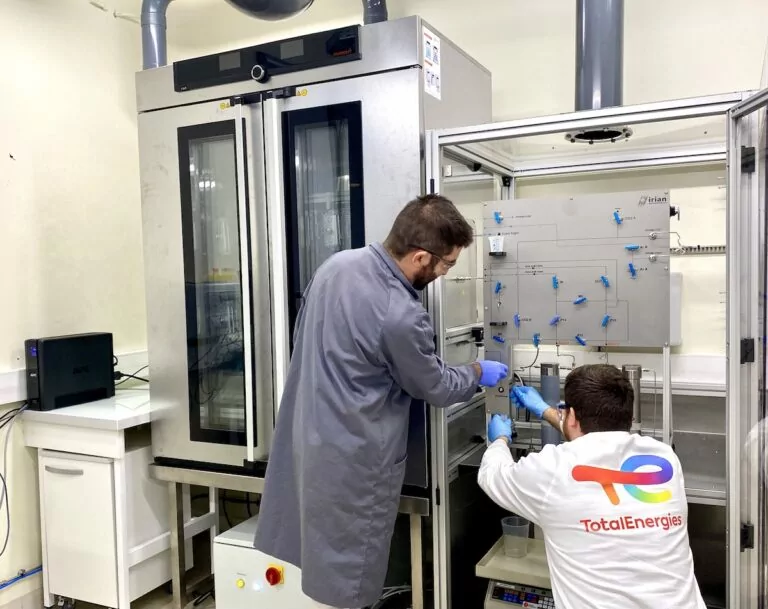 Extreme Environment Simulation Systems
Mastering Carbonic Corrosion at 140 bar: Engineering a Hastelloy C-276 Characterization Rig
Extreme Environment Simulation Systems
Mastering Carbonic Corrosion at 140 bar: Engineering a Hastelloy C-276 Characterization Rig
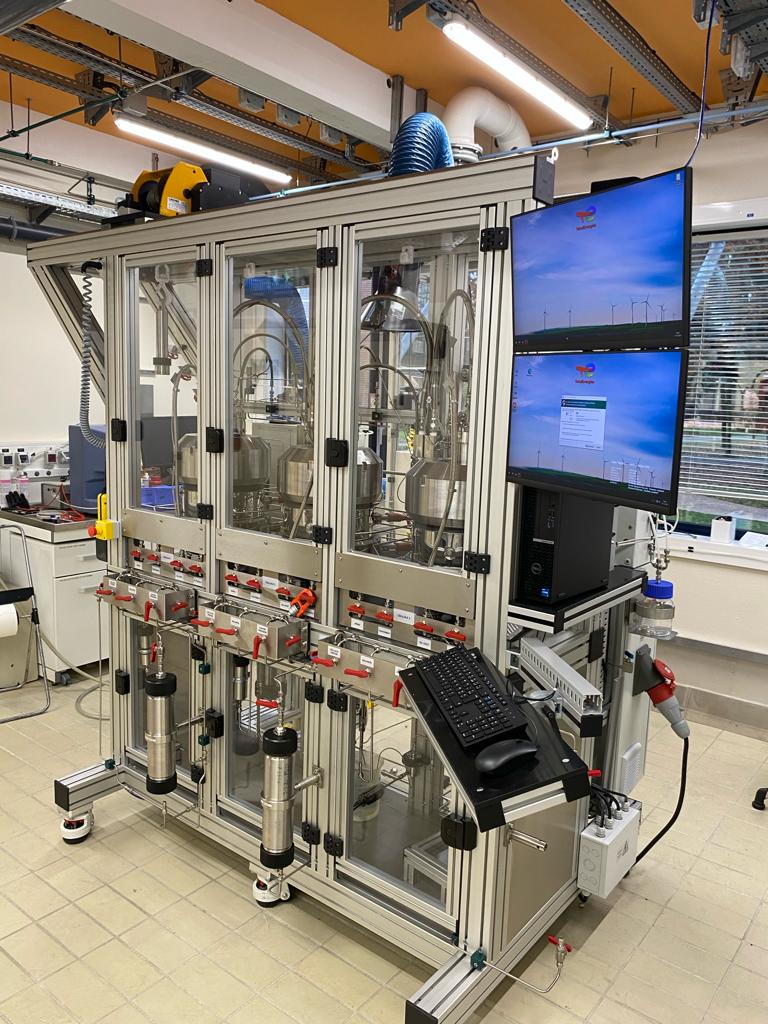 Extreme Environment Simulation Systems
Multi-Cell 400 bar / 250°C Test Bench for Formation Damage Analysis
Extreme Environment Simulation Systems
Multi-Cell 400 bar / 250°C Test Bench for Formation Damage Analysis
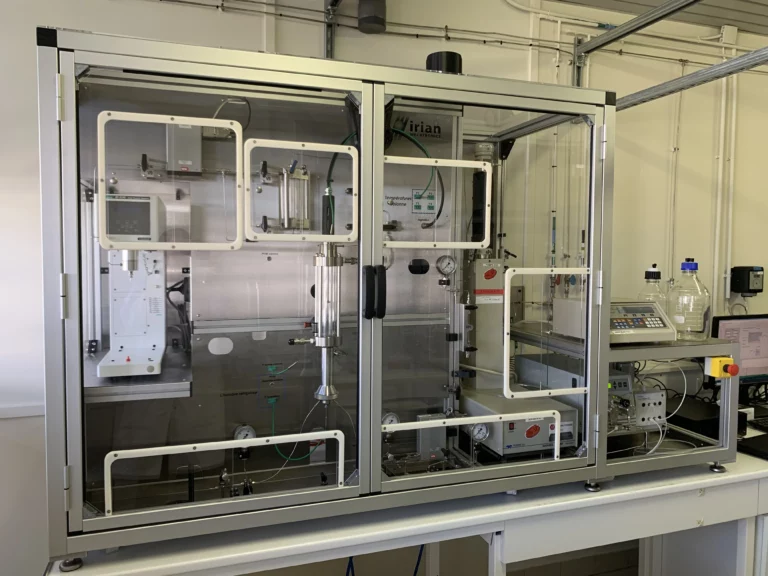 Extreme Environment Simulation Systems
Custom 120 bar Sapphire Column for Gas Hydrate Research
Extreme Environment Simulation Systems
Custom 120 bar Sapphire Column for Gas Hydrate Research
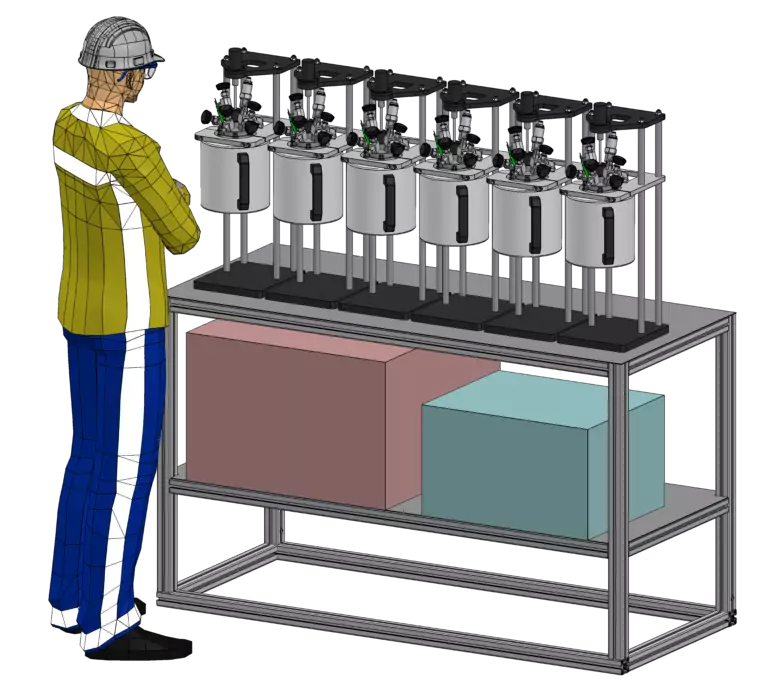 Extreme Environment Simulation Systems
Custom Hastelloy C276 HPHT Reactor System for Geoscience Research
Extreme Environment Simulation Systems
Custom Hastelloy C276 HPHT Reactor System for Geoscience Research