
Case study · Geoscience & subsurface studies
Retrofitting proprietary high-pressure pumps for PVT analysis
For a geoscience services laboratory, IRIAN Mecatronics performed a complete retrofit of three high-pressure pumps used for PVT analysis. The upgrade replaced an obsolete proprietary control system with an open, standard architecture while restoring the equipment's mechanical integrity.
01 — The research question
How to upgrade lab equipment when its proprietary control system is no longer supported?
Many pieces of lab equipment, while mechanically sound, become unusable when their proprietary control electronics reach end-of-life. Without support from the original manufacturer, a single board failure can sideline a critical instrument, and replacement with a new unit represents a major investment.
This was the case for three high-pressure pumps essential to our client's Pressure-Volume-Temperature (PVT) analyses. Faced with an irreparable obsolete control system and mechanical failures, the only viable option to preserve the initial investment in their precision mechanics was a <a href="https://irian-mecatronics.com/maintenance-retrofit-requalification-services/">complete retrofit</a>.
How to replace the entire control chain (electronics, motor, software) of a proprietary high-pressure pump with standard industrial components, while preserving its precision mechanics and developing a software interface that replicates the original user experience?
02 — Our approach
A three-part approach: mechanics, electronics, and software
The project involved a complete overhaul led by our in-house engineering team. The goal was to deliver a reliable system, maintainable over the long term, and immediately usable by the laboratory's technicians.
-
Restoring mechanical integrity
The pumps showed significant damage to the piston and lead screw. A full disassembly allowed us to inspect and replace all critical and wear parts. This refurbishment was a prerequisite to ensure safe, leak-tight operation up to 980 bar, as confirmed by factory leak tests.
-
Replacing the proprietary control system with an open architecture
Faced with undocumented original electronics, we replaced the entire control chain with a standard solution: a programmable logic controller (PLC), motor, and drive. This choice eliminates the risk of a hazardous repair and ensures the equipment's longevity, as its components are now easy to source.
-
Developing custom software for immediate adoption
To avoid disrupting existing test protocols, we developed a software interface that faithfully mimics the original ergonomics. Operators were able to use their familiar work modes (constant pressure, flow rate, and volume) without extensive training, ensuring the continuity and consistency of their measurements.
03 — The outcome
What this equipment made possible
The client regained full operational capacity for three pieces of equipment critical to their business, avoiding the cost of purchasing new units. The new solution ensures the longevity of these pumps with a modern, reliable control system based on standard components, which simplifies future <a href="https://irian-mecatronics.com/maintenance-retrofit-requalification-services/">maintenance</a> and reduces the risk of downtime.
Is your equipment limited by obsolete electronics?
Chemistry / Petrochemicals
Upgrading <a href="https://irian-mecatronics.com/process-development-chemical-pilot-plants-instrumented-experimental-systems/">pilot reactors</a> or catalytic test benches. The principle is the same: replace the electronics with an industrial PLC and develop a custom HMI to preserve operator habits, adapting the control loops to the specific physical parameters.
Materials testing
Refurbishing older hydraulic presses or compression frames. The approach involves integrating a PLC for precise force or displacement control, and dedicated software for programming test cycles and acquiring data.
Energy
Upgrading test rigs (hydrogen storage, CO₂ capture) with rigid initial controls. The retrofit methodology based on standard components provides the flexibility needed to implement new protocols, adapting the design to specific constraints (materials, ATEX).
04 — Specifications
The values for this project. Every system is custom-built, so they adapt to your requirements.
Show specifications · up to 980 bar (14,200 psi) · 300 mL · 3
| Control pressure | up to 980 bar (14,200 psi) |
|---|---|
| Pump volume | 300 mL |
| Number of units retrofitted | 3 |
| Control modes | Constant pressure, constant flow rate, constant volume |
IRIAN Mecatronics designs and builds custom high-pressure, high-temperature equipment for research laboratories, technical centres and industry.
About the companyThey trust us






















05 — FAQ
Frequently asked questions
Can a pump be retrofitted to reach pressures above 1,000 bar?
Yes, the retrofitting principle applies to pumps across various pressure ranges. The maximum achievable pressure will primarily depend on the mechanical limits of the original pump (body, piston, seals). Our engineering team systematically evaluates the existing mechanical design to confirm its compatibility with the new target performance.
Our lab operates in an ATEX environment. Can such a retrofit be certified?
Yes, a retrofit can be designed to comply with the ATEX directive. This involves selecting certified components (motor, sensors) and applying the appropriate design rules for explosive atmospheres. The risk analysis and the preparation of the technical file are an integral part of our <a href="https://irian-mecatronics.com/hydrogen-atex-test-benches/">design process for ATEX environments</a>.
Can this upgrade approach be applied to equipment other than pumps, such as a stirred reactor?
Absolutely. The methodology is particularly relevant for any equipment where the mechanics are sound but the control system is obsolete. For a <a href="https://irian-mecatronics.com/custom-hpht-reactors-autoclaves-analysis-cells/">high-pressure reactor</a>, the retrofit would involve replacing the old system with a PLC to manage temperature, pressure, and stirring speed, along with a modernized software interface.
We want to not only upgrade our equipment but also add new software features. Is that possible?
Yes, this is one of the main advantages of this approach. Developing custom software allows us not only to replicate the existing functionality but also to integrate new features: automated test sequences, more comprehensive data logging, alarm management, or remote control. The specifications are defined with you to meet your new requirements precisely.
Is your lab equipment sidelined by obsolete electronics?
Describe your constraints and the limitations of your current system. Our engineering team will analyze the feasibility of a retrofit and get back to you with a custom architecture proposal.
Related projects
 Precision pumps & injection systems
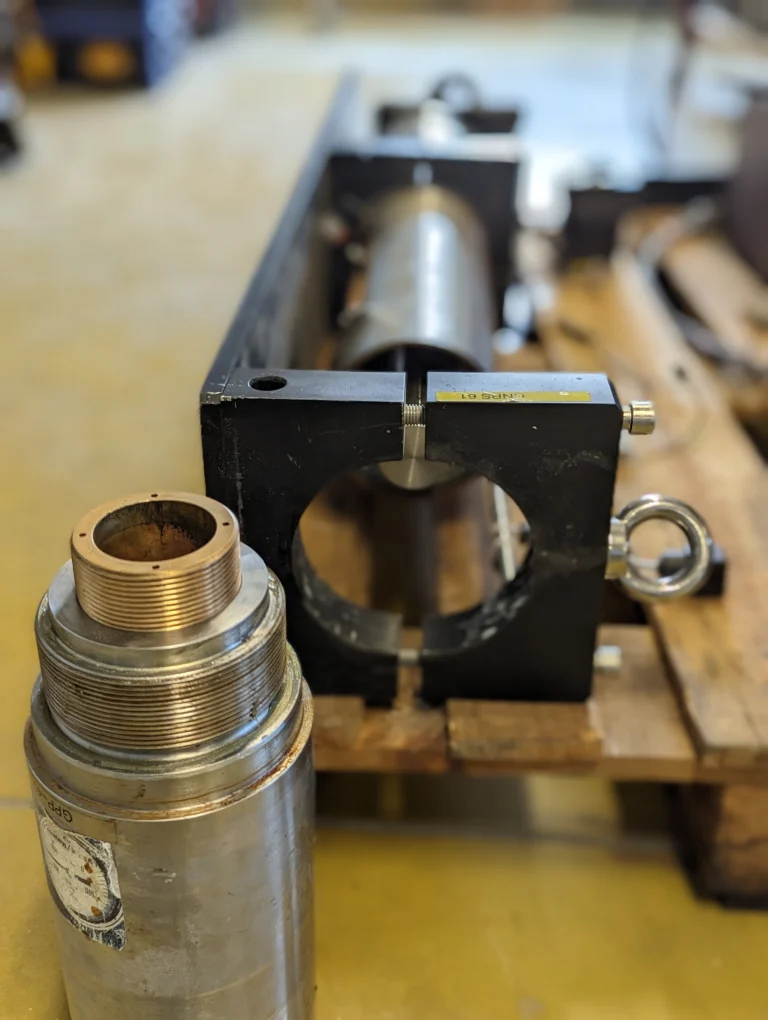
Pump refurbishment: high-pressure positive displacement pumps
Precision pumps & injection systems
Pump refurbishment: high-pressure positive displacement pumps
 Geoscience & subsurface studies
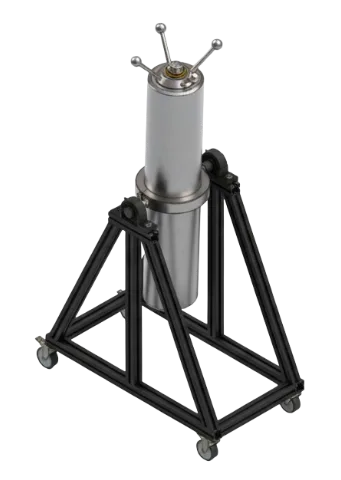
1200‑bar floating piston cells for HPHT reservoir fluid studies
Geoscience & subsurface studies
1200‑bar floating piston cells for HPHT reservoir fluid studies
 Precision pumps & injection systems
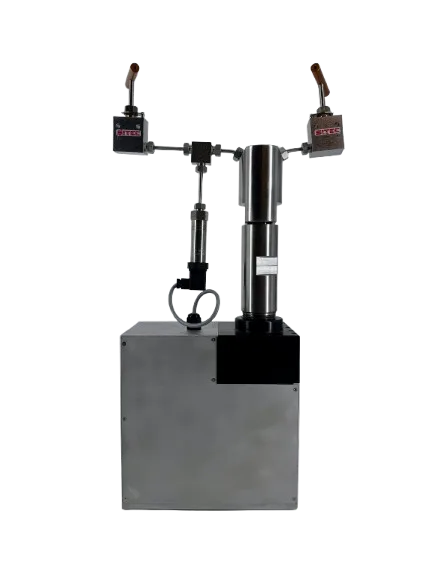
6 mL 6000 bar UHP pump for water pressurization in food science research
Precision pumps & injection systems
6 mL 6000 bar UHP pump for water pressurization in food science research
 Geoscience & subsurface studies
1380 bar HPHT aging bench: simulating extreme conditions for cement and fluids
Geoscience & subsurface studies
1380 bar HPHT aging bench: simulating extreme conditions for cement and fluids