

Case study · Fluid dynamics & phase behavior
Visualizing supercritical CO2: a portable high-pressure demonstration cell
For a major energy company, IRIAN Mecatronics designed and built a high-pressure (80 bar / 1,160 psi) visualization cell to demonstrate the transition of CO2 to its supercritical state for a non-specialist audience. The fully self-contained, portable unit integrates all functions into a single carrying case, ensuring absolute safety for use at conferences and public events.
01 — The research question
How can you safely demonstrate a high-pressure phenomenon outside of a laboratory?
Observing a physical phase change or a chemical reaction under controlled pressure and temperature requires a controlled environment. When this observation needs to happen outside a lab—for training, a client demo, or a trade show—the challenge is twofold: the equipment must be miniaturized and self-contained, and it must guarantee absolute safety for an untrained audience.
This was the challenge our client presented: making the transition of CO2 to its supercritical state visible and understandable during a conference. Laboratory equipment capable of reaching these conditions, such as custom HPHT reactors and cells, are typically stationary, bulky, and rely on building utilities. They are not portable or designed for operation by non-specialists in a public space.
Designing a compact, self-contained system to visualize a high-pressure (80 bar) phenomenon while guaranteeing absolute safety for public use.
02 — Our approach
Designing a 'plug-and-play' demonstration tool
The design addressed three inseparable requirements: maximum visual impact, complete autonomy, and uncompromised public safety.
-
Ensuring clear visualization at 80 bar
The disappearance of the supercritical meniscus is subtle. For educational impact, a wide, distortion-free view at 80 bar was essential. We integrated large-diameter optical windows that combine mechanical strength with clarity, ruling out smaller viewports that would have diminished the demonstration's visual impact.
-
Integrating a laboratory into a carrying case
A complete system (cell, heating, cooling, pump) is normally spread out on a lab bench. To make it portable by one person, we designed an all-in-one chassis that integrates all components into a single carrying case. The equipment is 'plug-and-play' and is controlled from a standard PC.
-
Securing high-pressure equipment for a public audience
Operating at 80 bar in public requires safety measures that go beyond mere robustness. In addition to designing the unit in compliance with the Pressure Equipment Directive (PED), we added redundant safety barriers: active overpressure protection and a passive shield to contain any projectiles in the unlikely event of a rupture.
03 — Beyond this project
Does your application require visualizing phenomena under pressure in a compact format?
Higher education / training
To visually and safely demonstrate physicochemical phenomena (crystallization, reactions) in a classroom setting. The core concept of a compact, safe cell with simple controls would be retained, while adapting the materials and P/T range to the specific phenomenon under study.
Food & Beverage (R&D)
To visualize the effect of processes (supercritical extraction, HP pasteurization) on samples. The design would keep the windowed cell, precise control, and portability, but use food-grade materials and a customized internal geometry.
Cosmetics / Pharmaceuticals
To observe the stability or formation of emulsions or suspensions under specific conditions. The direct visualization in a closed system, small sample size, and operational safety would be maintained, with wetted materials selected for product compatibility.
04 — Specifications
The values for this project. Every system is custom-built, so they adapt to your requirements.
Show specifications · 80 bar (1,160 psi) · -10°C to +150°C (14°F to 302°F) · 7 cm³
| Maximum operating pressure | 80 bar (1,160 psi) |
|---|---|
| Operating temperature range | -10°C to +150°C (14°F to 302°F) |
| Internal cell volume | 7 cm³ |
| Viewing diameter | 30 mm |
| Control | PC-based interface (requires 3 USB ports) |
IRIAN Mecatronics designs and builds custom high-pressure, high-temperature equipment for research laboratories, technical centres and industry.
About the companyThey trust us






















05 — FAQ
Frequently asked questions
Can a similar portable demonstrator be built to observe corrosive fluids?
Yes, the principle of a compact visualization cell is adaptable. For corrosive fluids, we would select inert wetted materials such as Hastelloy C-276, titanium, or engineering polymers. The overall design, case integration, and control system would remain the same, similar to what we do for our test rigs built with corrosion-resistant alloys.
Can this demonstration cell be adapted for much higher pressures, for example, 500 bar?
Reaching 500 bar in a portable format is possible, but would require design trade-offs. We would likely need to reduce the viewing diameter to maintain a reasonable window thickness, or use higher-performance materials like sapphire. The pressurization system would also need to be resized. While self-containment and compactness would remain the goals, the weight and overall size would inevitably increase.
Is the thermal regulation system limited to electric heating and Peltier cooling?
No, that was the choice made for this project to ensure autonomy and compactness. If the equipment could be connected to an external cooling source (chiller, chilled water loop), we could integrate a more powerful cooling circuit to reach lower temperatures or dissipate more heat. The choice of regulation technology always depends on the project specifications and the operating environment.
Is equipment like this, when used in public, subject to the Pressure Equipment Directive (PED)?
Yes, any equipment with a maximum allowable pressure greater than 0.5 bar falls within the scope of the PED 2014/68/EU. For this project, we systematically follow best engineering practices and the directive's requirements for design, manufacturing, and documentation to ensure safety. This is standard practice for all our custom test benches and pilot plants.
Does your project require visualizing a process under pressure outside the lab?
Describe your constraints, the phenomenon to be observed, and the operating environment. Our engineering team will analyze your project's feasibility and get back to you with a proposed approach.
Related projects
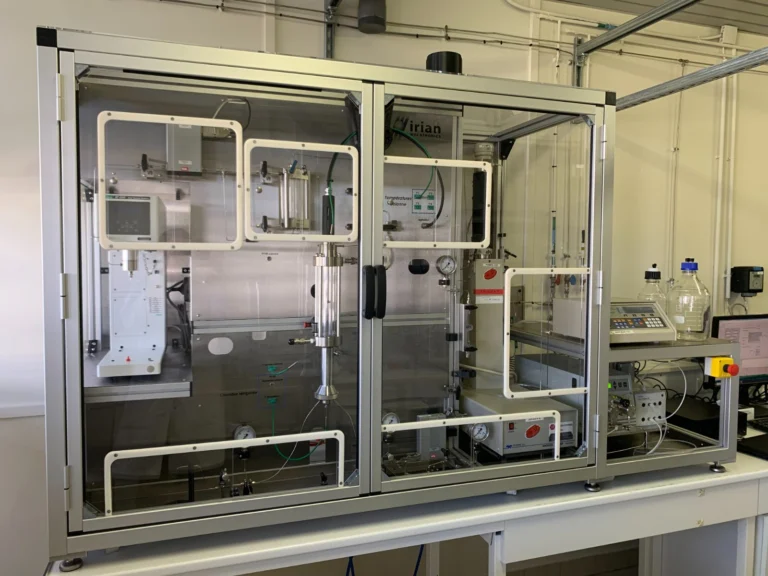 Fluid dynamics & phase behavior
Custom 120 bar sapphire column for gas hydrate research
Fluid dynamics & phase behavior
Custom 120 bar sapphire column for gas hydrate research
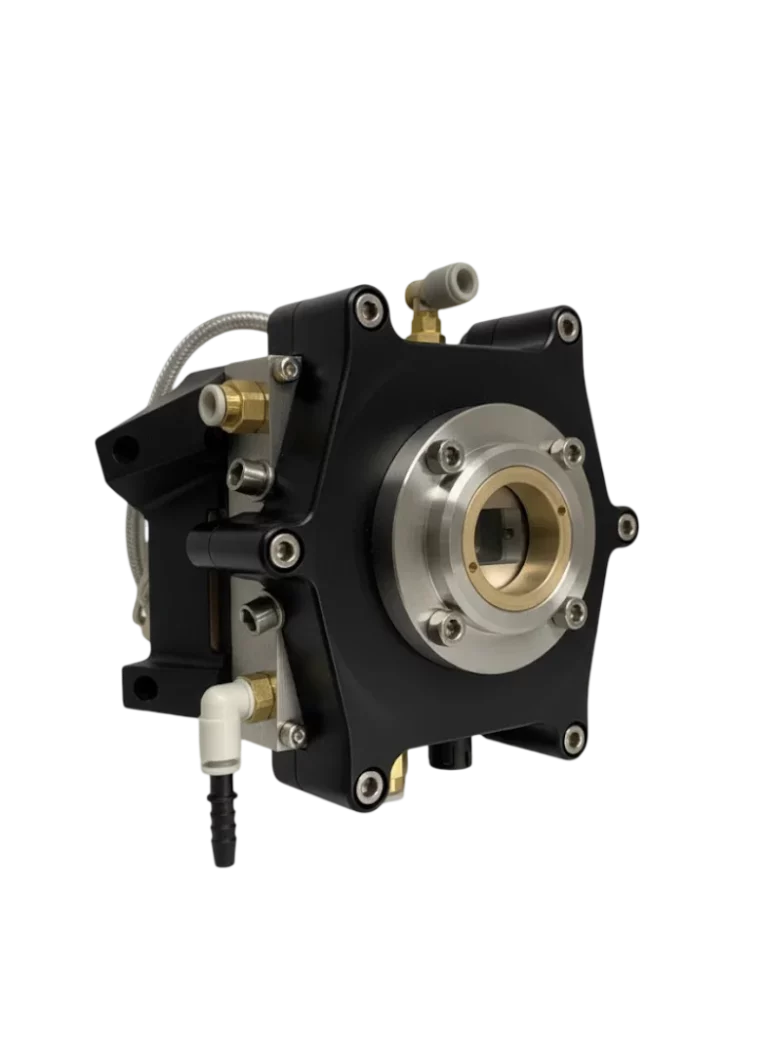 Fluid dynamics & phase behavior
1000 bar high-pressure injection bench for extreme low-temperature (-70°C) microfluidic studies
Fluid dynamics & phase behavior
1000 bar high-pressure injection bench for extreme low-temperature (-70°C) microfluidic studies
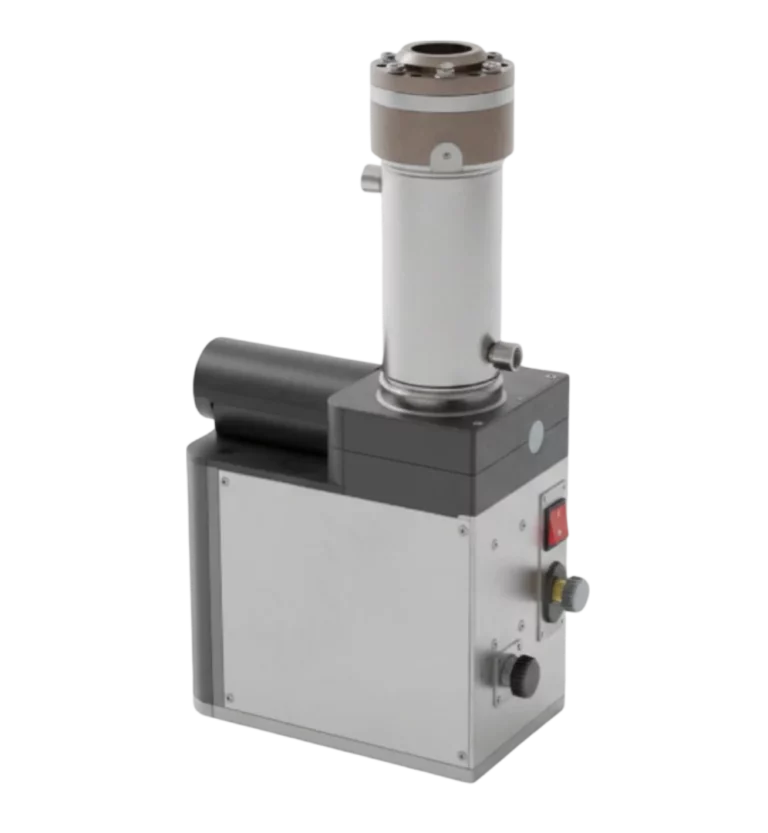 Fluid dynamics & phase behavior
500 bar / 150°C titanium variable volume cell for HP fluid research
Fluid dynamics & phase behavior
500 bar / 150°C titanium variable volume cell for HP fluid research
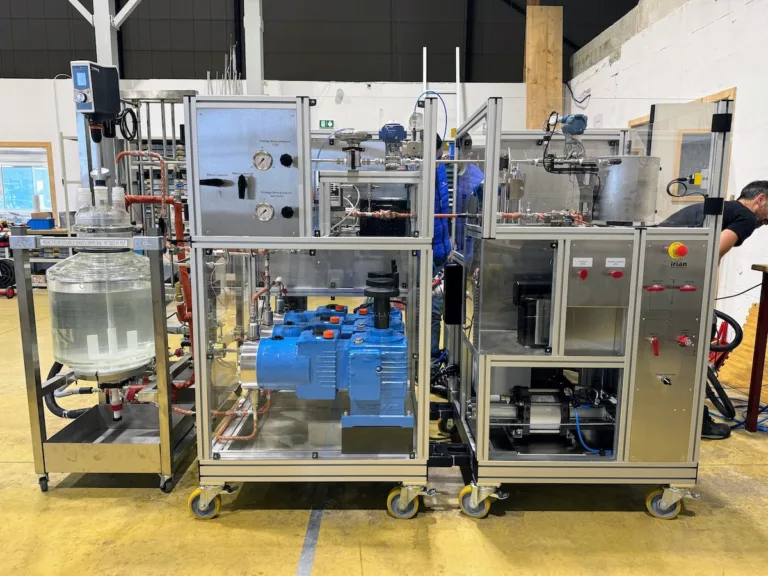 Fluid dynamics & phase behavior
HPHT pilot unit for simulating turbulent flow with DRA agents
Fluid dynamics & phase behavior
HPHT pilot unit for simulating turbulent flow with DRA agents