Skip to content

Research & Development

Supercritical CO₂ Equipment

We design and build custom test rigs for researchers and engineers studying phenomena in liquid or supercritical CO₂. Our equipment reproduces your process conditions to observe phase changes, conduct reactions, simulate geological storage, or characterize corrosion.

01 — The problems we solve

Your supercritical CO₂ experiments

Supercritical CO₂ presents unique challenges, from its high compressibility to its corrosivity in wet environments. Each card describes an experimental challenge and the solutions we have built to address it.

Observing CO₂ phase changes under pressure

Measuring a bubble or dew point requires visualizing the disappearance of the liquid-gas interface. The experiment demands a perfectly sealed, high-pressure view cell, with fine control over volume and temperature to precisely control and measure the phase transition.

Delivered for

See the 3 projects ↓

Running reactions and extractions in supercritical media

A supercritical reaction requires maintaining stable pressure and temperature over long periods. Effective mixing must be achieved without compromising the seal, especially with mechanical stirring, and it must be possible to take representative samples without disturbing the test's thermodynamic equilibrium.

Delivered for

See the 2 projects ↓

Simulating geological CO₂ storage (CCUS)

Simulating geological storage requires maintaining representative HPHT reservoir conditions for weeks or months. The equipment must ensure absolute stability, resist corrosion from wet CO₂, and allow the measurement of slow phenomena like percolation or fluid-rock interactions.

Delivered for

See the 2 projects ↓

Controlling corrosion in wet CO₂ environments

CO₂ dissolved in water forms carbonic acid, which is highly corrosive to standard steels. To ensure measurements reflect the sample's behavior and not the test rig's degradation, all wetted parts must be machined from high-grade alloys like Hastelloy, titanium, or super duplex stainless steel.

Delivered for

See the 2 projects ↓

02 — Custom-built

Custom designs for CO₂

Each piece of equipment is adapted to specific test conditions. Here are some examples of designs dedicated to the unique properties of CO₂.

CO₂ injection pumps and skids

Injecting CO₂ at a constant flow rate or pressure requires countering its high compressibility and tendency to vaporize. Our designs incorporate solutions like cooling the pump heads to keep the CO₂ in a dense liquid phase, ensuring stable and accurate injection.

Customization of cooling, volume, pressure, flow rate, and control mode (flow or pressure).

Variable-volume and visualization cells

Observing the phase behavior of CO₂ and its mixtures requires integrating windows, volume variation, and stirring into a single HPHT vessel. A custom design allows the geometry, materials, and technology for each function to be adapted to the test constraints.

Customization of windows (sapphire, full visibility), volumes, materials, and stirring method.

Continuous or stirred reactors

Running reactions in supercritical CO₂ requires a specific design for feeding reactants, mixing, sampling, and collecting products under pressure. Each reactor is designed for a specific type of reaction, with dedicated instrumentation and automation.

Customization of pressure, temperature, CO₂ and reactant feeds, and collection method.

Storage and corrosion test rigs

Studying long-term interactions between CO₂, water, and materials requires equipment that is stable for several months and made from corrosion-resistant alloys. The design includes the ability to test multiple samples in parallel under strictly identical conditions.

Customization of materials, number of samples tested in parallel, and test duration.

03 — Measurements

Measured parameters

Test rigs are instrumented to acquire the data needed to understand the phenomena being studied.

Pressure, temperature

These are the fundamental parameters that define the thermodynamic state of CO₂, including its transition to a supercritical state. Their precise control and measurement are the basis of any reliable experiment.

Injected volume, flow rate, density

Accurate quantification of matter is essential for mass balances, kinetic studies, or permeability calculations. It relies on injection systems designed for the high compressibility of CO₂.

Camera observation

Visual detection of phase changes (bubble point, dew point, supercritical transition, hydrate formation) is often the most direct method. It is made possible by integrating sapphire windows into cells and reactors.

Permeability

Measuring a rock's capacity to be permeated by CO₂ is a key parameter for geological storage. It is determined by measuring the pressure drop across a sample at a known injection flow rate.

Sampled compositions

Tracking the progress of a reaction or extraction involves analyzing fluid composition. Our systems allow pressurized samples to be taken without disturbing the test conditions.

04 — Projects

Our supercritical CO₂ projects

7 projects

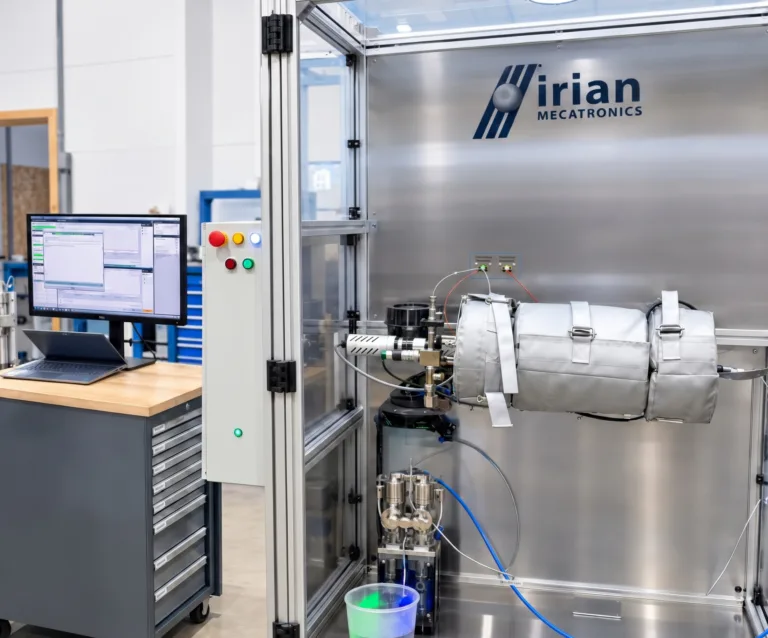
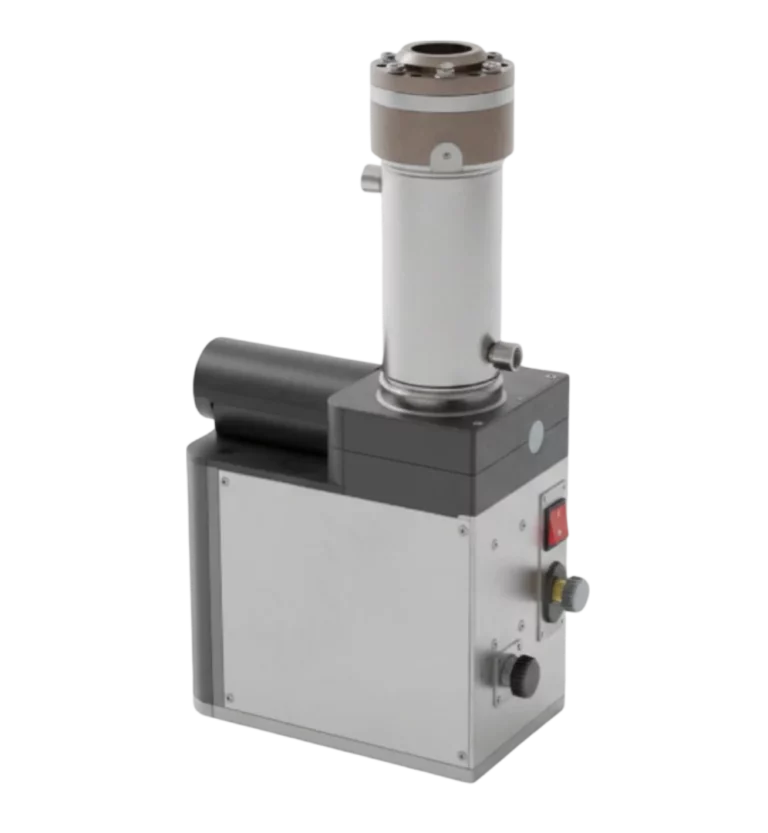
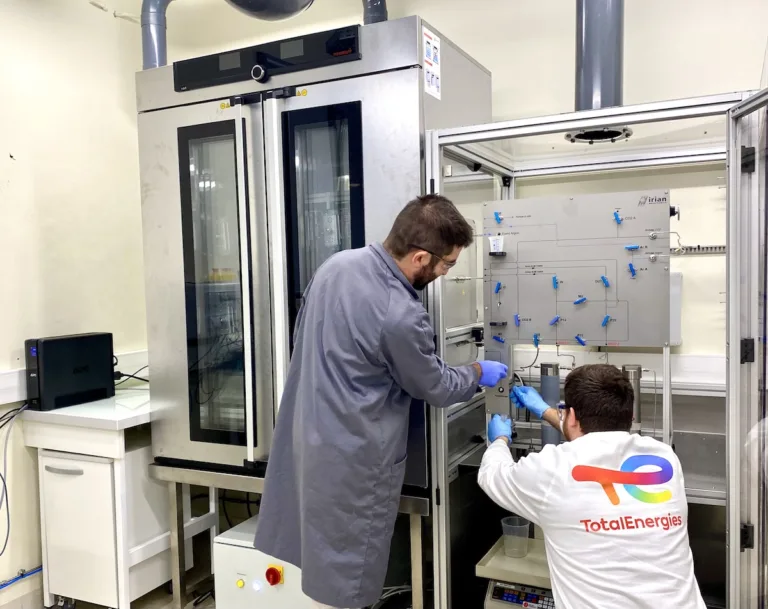
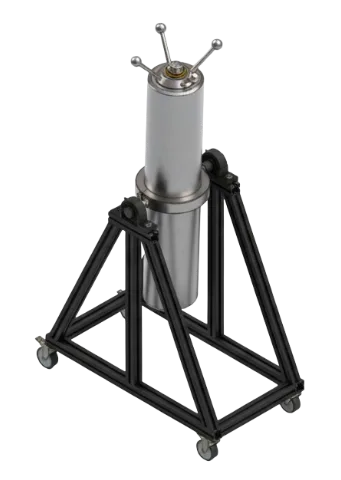
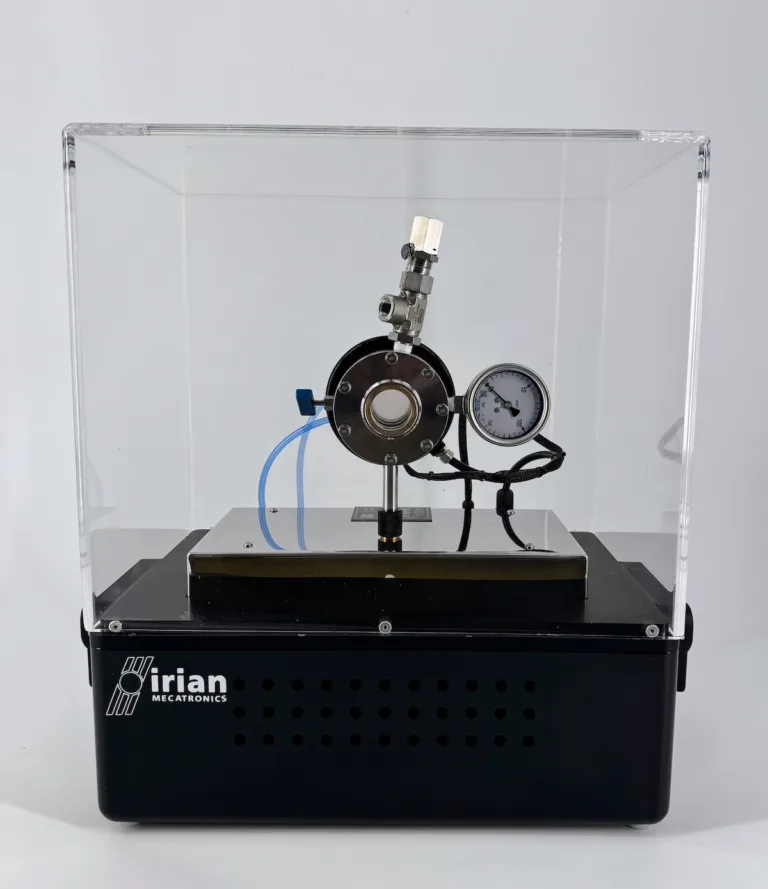
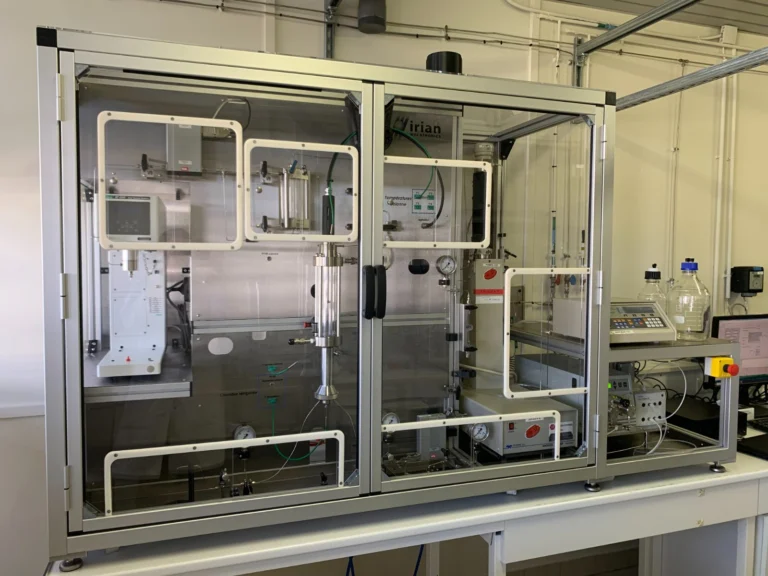
Supervision interface of the pressurised mechanochemistry bench HPHT Reactors & Cells Custom High-Pressure Rotating Reactor for Mechanochemistry at 250 bar Design of a rotary mechanochemistry reactor for materials chemistry research. This custom equipment enables ball milling in a supercritical CO2 environment, ensuring a perfect… 3D view of a motorised 50 mL variable-volume cell rated for 500 bar Fluid Dynamics & Phase Behavior 500 bar / 150°C Titanium Variable Volume Cell for HP Fluid Research Design of a 50 mL titanium HPHT cell for studying fluid phase behavior at 500 bar / 150°C. A custom solution that integrates magnetic… HPHT Reactors & Cells200 bar300°CConfidential project · photo withheld HPHT Reactors & Cells Pressurized Flow Reactor Systems for CO2 Capture (CCUS) Research Reactor platform (Tubular & CSTR) for CO2 capture research (200 bar, 300°C). Engineers integrating a frame with several high-pressure cells in the client's laboratory Geoscience & Subsurface Studies Mastering Carbonic Corrosion at 140 bar: Engineering a Hastelloy C-276 Characterization Rig Custom multi-sample test rig for permeability measurement under extreme conditions (140 bar, 130°C). Its Hastelloy design ensures measurement integrity against a highly corrosive fluid… Tall HPHT floating-piston cell mounted vertically on a mobile stand Geoscience & Subsurface Studies 1200‑bar Floating Piston Cells for HPHT Reservoir Fluid Studies We built 1200 bar HPHT floating piston cells (up to 5L) for reservoir fluid studies. Made of Super Duplex F53, they resist corrosive fluids… Portable supercritical CO2 demonstrator in its transparent protective enclosure Fluid Dynamics & Phase Behavior Supercritical CO2 Demonstration Cell Design and fabrication of a portable, self-contained high-pressure (80 bar) visualization cell for the energy sector. Housed in a briefcase, the equipment allows for… High-pressure sapphire column reactor on its pivoting stand Fluid Dynamics & Phase Behavior Custom 120 bar Sapphire Column for Gas Hydrate Research Modular 120 bar reactor with a sapphire column for visualizing hydrate formation in corrosive media. The design allows switching between a porous medium and…

05 — Our approach

Our process: from scientific question to test rig

Each project is a close collaboration with the researcher to translate an experimental problem into a functional, safe, and durable piece of equipment.

  1. Understanding the phenomenon

    Our engineering team starts with your scientific objective and the specific challenges of CO₂: high compressibility, corrosion, explosive decompression. This initial analysis is key to defining the functional specifications of the future equipment and choosing the right technologies.

  2. Designing the technical solution

    We translate the specifications into a complete technical solution. This involves mechanical design (PED), material selection (Hastelloy, titanium), instrumentation, and developing the automation for precise and safe control of your experiment.

  3. Proving the solution

    The equipment is fully assembled and tested at our Morlaàs factory (FAT) to validate its performance and safety before shipment. We then handle commissioning at your site and operator training to ensure a quick and effective start.

They trust us

  • CNRS
  • CEA
  • BRGM
  • Ifremer
  • EDF
  • TotalEnergies
  • Michelin
  • CETIM
  • Centrale Lille
  • Université de Pau et des Pays de l'Adour
  • Sonatrach
  • Saudi Aramco
  • Nanchang University
  • Adisseo
  • Lafarge
  • MDS
  • MIO – Mediterranean Institute of Oceanography
  • IRT Saint Exupéry
  • IRD – French National Research Institute for Sustainable Development
  • Groupe INSA
  • Aix-Marseille Université

06 — FAQ

Frequently asked questions

Are your pumps really suitable for the high compressibility of CO₂?

Yes, our injection systems are specifically designed for it. We incorporate solutions like cooling the pump heads and cylinders to keep the CO₂ in a dense liquid phase. This ensures a precise and stable mass or volumetric flow rate, without the vaporization issues that affect standard pumps.

How do you ensure safety with pressures exceeding 74 bar (1,073 psi)?

Safety is at the core of our design process, in compliance with the Pressure Equipment Directive (PED). Each test rig integrates multiple layers of protection: hardware safeties like relief valves, and software safeties programmed into the controller (interlocks). The entire system is validated during the factory acceptance test (FAT).

What is the lifetime of seals in contact with supercritical CO₂?

It depends on selecting the right material and managing pressure cycles. We use specific elastomers known for their resistance to explosive decompression from CO₂. We can also integrate controlled depressurization sequences into the controller to protect the seals and maximize their longevity.

Can other supercritical fluids besides CO₂ be studied with this equipment?

Yes, it is often possible, although the design is optimized for the challenges of CO₂. The material compatibility (Hastelloy, titanium, etc.) and the high-pressure, high-temperature ratings of our equipment allow for studying other fluids. However, the feasibility for a specific fluid must be validated on a case-by-case basis by our engineering team.

Do you need to run an experiment in a supercritical CO₂ environment?

Describe the phenomenon you want to study and the conditions to reproduce. Our engineering team will get back to you to discuss a technical solution.

Discuss your project